Key Points:
Puppies throw up for a variety of reasons, including eating table scraps, food allergies, bacterial infections, and other causes of dog vomiting.
Vomiting is different from regurgitating food, and regurgitation generally happens when a puppy (or dog) eats too much or too quickly.
If your puppy is vomiting so much that they can’t eat normally, contact your veterinarian right away for medical help.
As adorable as your new puppy is, even the cutest dog can have accidents, roll around in stinky things, and start throwing up on your couch cushions. (If this is your first puppy, go ahead and say RIP to your favorite area rug.)
Spoiler alert: A little bit of vomit is totally normal. Puppy throw-up can be distressing, but it’s not always a cause for concern for your dog.
In this guide, we’ll explain when you should worry, how to spot warning signs, symptoms, and common puppy illnesses and accidents that can cause vomiting. This information applies to any dog, not just a puppy, and this knowledge can help with vomiting in adult dogs, too.
Is my puppy regurgitating food or vomiting?
When your puppy vomits, they forcefully expel whatever is in their stomach and sometimes their upper intestines. But there’s a key difference between regurgitating food and true vomiting. If your puppy is regurgitating food, you’ll likely notice:
It happens soon after they eat.
Undigested food or blades of grass will come up.
Your puppy may try to gobble their regurgitated food up again.
Puppies may regurgitate food if they’ve eaten too quickly or eaten too much. If it happens frequently, have your dog checked out by a veterinarian to look for an underlying condition.
Vomiting will look a little different. You’ll typically notice:
Your puppy will act sick and heave.
They’ll eject food or other stomach contents that contain bile.
Their vomit will look slimy or partially or fully digested.
If your vomiting puppy is showing symptoms of distress, including whining, lethargy, or loss of appetite for more than a few hours, call your vet. The same goes for if they vomit or poop blood (which can look like coffee grounds), have vomit and diarrhea at the same time, or eat a foreign body, like a toy. If you also have a cat at home, keep them away from the vomit and any suspect substances until you’ve cleaned up and figured out what your dog may have eaten.

What to do if your dog is vomiting
If you walk in and see your dog vomiting, focus on safety and observation before you make any dramatic moves. First, remove access to food, chews, and any suspect substances (trash, plants, human medications, cleaning products) to protect your dog. This can help stop further ingestion and may prevent your dog from throwing up again.
Next, do a quick check of your pet’s mouth for any string, bones, or toys (don’t pull anything that seems stuck), then note the timing and what the vomit looks like: food, foam, mucus, undigested food, or yellow bile. Take a picture if you can. These details can help your veterinarian assess the vomit for clues on its cause. Keep an eye out for other symptoms like vomiting, diarrhea, repeated vomiting, weakness, belly pain, or signs of dehydration (tacky gums, sunken eyes, not urinating).
Once their stomachs settle, offer small sips of water. If your dog can’t keep even water down for a few hours, that could be an emergency. And if you suspect poisoning or toxic exposure, contact a vet or an animal hospital immediately. Bring the package/label of what they consumed if you can. A clear photo of the vomit, plus notes on recent eating, feeding changes, and any new treats, new chews, or dog food brands, can help your veterinary team decide the next steps.
Why is my puppy vomiting?
The reasons why puppies throw up range from mild to serious, and they include many causes that can also affect an adult dog:
Regular stomach upset (from things like spoiled food, motion sickness, or even overexcitement), eating human foods, eating garbage, food intolerances, bacterial infection, eating foreign objects, and cancer.
Other possible causes include parasites, pancreatitis, gastrointestinal irritation, ulcers, and certain infectious disease processes.
With such a broad range, it’s important to note the symptoms your puppy or dog is experiencing so that you can tell your vet, who can help figure out the cause. If asked, bring a sample of the vomit to your vet.
When to treat vomiting as an emergency
Some dog vomiting is mild and clears up quickly, but certain signs mean you should treat it as an emergency and visit a veterinary hospital as soon as possible.
Seek medical care immediately if your dog is throwing up repeatedly, can’t hold down water, has blood in the vomit (bright red or dark like coffee grounds), has vomiting and diarrhea that continues, or seems severely unwell (collapse, fever, bloated stomach, or intense pain).
The same goes for a puppy throwing up after possible ingestion of a foreign object, toxins, or other toxic substances. These are common reasons that can turn serious fast and affect your dog's health.
Vomiting takes a toll on the body, causing other issues like dehydration. Young puppies and small pets can dehydrate quickly. Dehydration can develop within hours and become a more serious condition over 1–2 days.
Vomiting dogs may also need urgent help if you see yellow vomit with ongoing retching, persistent foam, lots of mucus, or a sudden new pattern of episodes after meals in your dog. Your veterinarian may recommend bloodwork, X-rays, and other medical testing to rule out gastrointestinal disease, ulcers, infections, pancreatitis, or an obstruction.
Does my puppy have a sensitive stomach?
It’s possible! Just like us, dogs can have food sensitivities or food allergies, and these issues can affect dog health. On the other hand, they may just be eating too many table scraps that are causing them to vomit.
Vomiting, flatulence, and loose stool are all potential signs that your puppy has a sensitive stomach. If you’re not sure, take your dog to the vet to make sure they don’t have a more serious condition. Once this is ruled out, you can talk to your vet about different options for adjusting your dog’s diet. If you’re changing diets, ask your vet whether a new formula is needed and whether certain brands are a better fit for your dog’s health needs.
Pet Pro Tip: If you have a dog that eats more mystery items than a 5-year-old at a state fair, consider getting a dog insurance plan as soon as possible. It can help you afford the best care in the future by covering eligible vet bills for digestive illnesses, toxic ingestion, and more.
How to help prevent frequent vomiting in dogs and puppies
You can’t prevent every illness, but you can lower the odds of frequent dog vomiting by addressing a few common triggers: rapid eating, sudden diet changes, and scavenging.
Feed them measured meals on a consistent schedule, consider a slow-feeder bowl for a fast eater, and skip rich table scraps. Human food can cause vomiting and diarrhea in many pets.
If you’re switching dog food or trying new brands, transition gradually over 7–10 days to reduce stomach upset and dog vomiting.
At home, keep counters clear, secure trash, and store human medications and household substances out of reach to reduce accidental ingestion and poisoning.
Supervise your dog outside so they don’t eat sticks, rocks, feces, or other items that can irritate the gastrointestinal tract and cause vomiting.
Routine veterinary care matters, too: keep parasite prevention up to date and talk with your vet about ongoing issues, especially if your dog has a sensitive stomach, a history of pancreatitis, or possible food intolerances or allergies that can affect health.
If your dog has repeated vomiting after car rides, ask your veterinarian about motion-sickness strategies and safe anti-nausea options.
Why is my puppy’s vomit yellow, white, red, or brown?
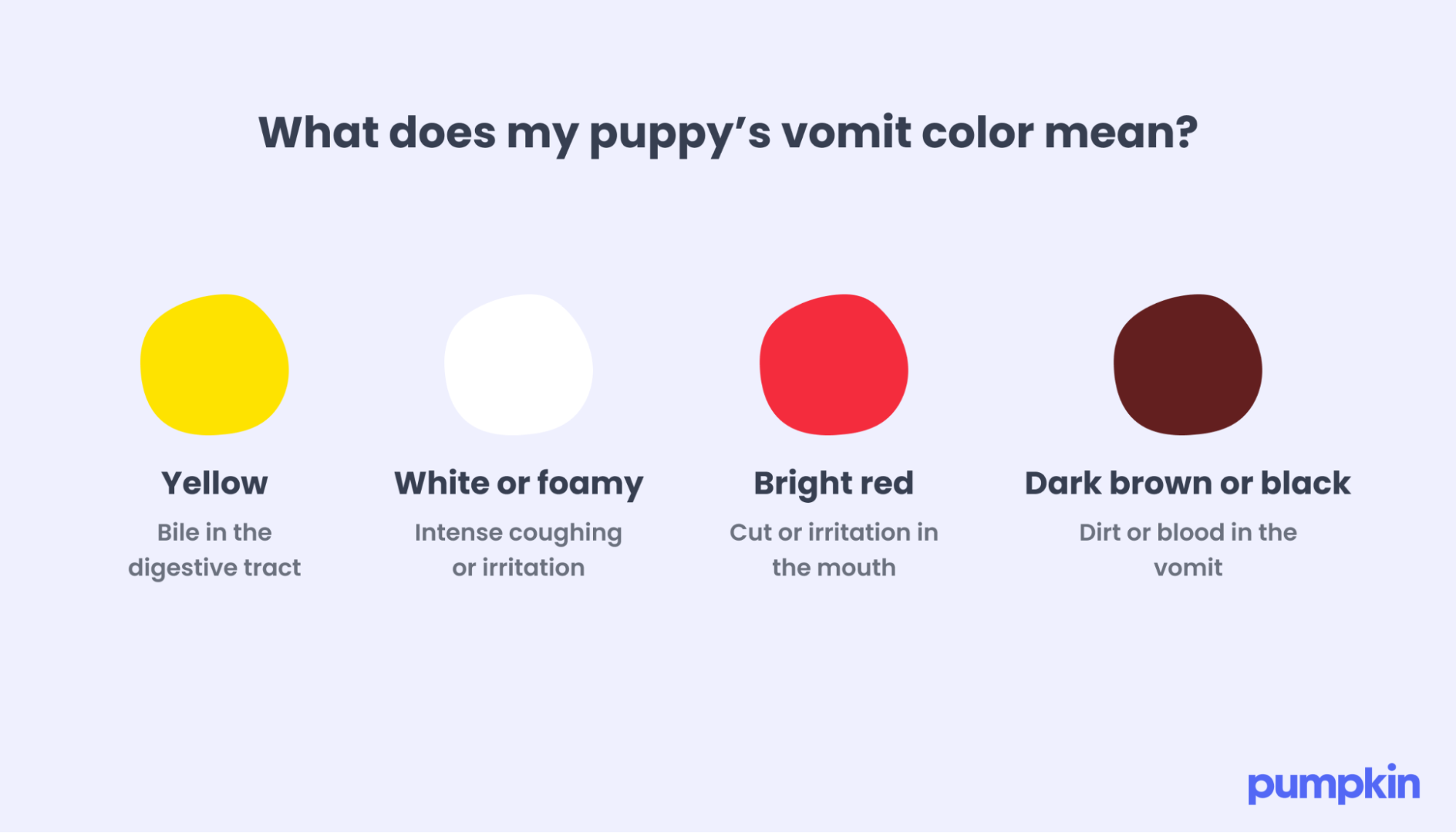
Just like puppy poo, which comes in a variety of colors, the color of your puppy’s vomit can tell you a lot about your dog’s overall health. Yellow vomit means the food or material they’re throwing up has been in their digestive tract long enough to secrete bile. But if it’s white or foamy, that can be the result of intense coughing or irritation.
Dark brown or black vomit can mean that your puppy simply ate dirt and needs to throw it up. However, these colors can also represent blood, which looks like coffee grounds in dog vomit and poop, and may signal serious dog vomiting.
If you ever notice fresh, reddish blood in your puppy’s vomit, it might be due to a cut or an irritation in their mouth or throat. Do a visual inspection to see if you can find a culprit — and regardless of the vomit color, follow up with your vet.
Details like color and texture can help your vet narrow down the cause of dog vomiting. Keep track of what your pet ate, any new treats, chews, or brands, and whether there was possible ingestion of bones, toys, or plants that could cause vomiting. Also note whether your dog had access to a cat litter box or cat food, since those can trigger stomach upset and vomiting in some dogs.
When to contact a Veterinarian for puppy vomiting
Most of the time, puppy vomiting clears up quickly on its own. In fact, your pup should feel better after they vomit, but ongoing dog vomiting is different.
When the vomiting doesn't stop, worsens, or affects your puppy's appetite, then it's time to tap in a professional to find the cause. Your vet will likely want to monitor your puppy for further episodes. They may also recommend short-term fasting, switching temporarily to a very bland diet for an upset stomach, or giving your puppy anti-nausea medication.
Other interventions for frequent dog vomiting include:
Probiotics or prebiotics to balance their gut bacteria
Surgery to remove a foreign object
Medication to treat intestinal parasites
Always be sure to provide your puppy with plenty of fresh water. If they’re reluctant to drink, adding unsalted chicken broth or bone broth to their dish might entice them.
Pedialyte can also be given to puppies, but it may cause diarrhea, and it is recommended to always consult with a veterinarian beforehand. If your puppy is very young or you’re seeing repeated vomiting in a litter, treat it as a veterinary concern and call them for guidance.
Treatment Options and Costs
If dog vomiting doesn’t improve or starts affecting your dog’s normal eating, your veterinarian may recommend supportive care (IV fluids, anti-nausea medication, stomach protectants) along with treatment targeted to the suspected cause. According to Pumpkin's claims data, the average cost for treating gastrointestinal issues in dogs can be upwards of $1,500.
For infections or parasites, medication may resolve the illness. For situations where an obstruction is possible, imaging and even surgery may be needed. For Mooshu, a Shiba Inu that began vomiting one day, eating rocks left his parents with a $6,984 vet bill to remove the obstruction. Another cause of frequent vomiting is pancreatitis, which can require diet changes and hospital-level care as a part of treatment.
Before you leave the vet, ask what to feed next (often a bland diet with a gradual feeding plan), what symptoms should trigger an emergency recheck, and what recovery might look like in hours or days for your dog.
If cost is a concern, having pet insurance before your puppy has a vomiting episode is key. After a short waiting period, eligible veterinary expenses related to accidents, ingestion, and gastrointestinal disease can be paid back. For 1-year-old Mooshu, his parents got $5,796 back from Pumpkin to help them pay for the treatment.¹
Puppy puke is inevitable, but it doesn’t have to be expensive
Welcome to puppy parenthood. (We promise it’s a lot more fun than it is gross.) With the right attention and knowledge, you’ll be able to help your puppy if they have problems with vomiting, and they probably will at some point.
Be sure to protect your new companion with the best vet care to support long-term health. Pumpkin puppy insurance plans can help cover eligible vet bills for future accidents and illnesses, so you can focus on caring for your pup instead of worrying about unexpected costs.
Claim Reimbursement is based on actual policyholder claims in 2023. Reimbursement amounts may vary depending on the specific terms of the policy, including coverage selected, annual deductible, reimbursement rate, and annual limit. Individual experiences and outcomes may vary.