Updated: 2 hours ago
Key points
Yellow dog poop is most often caused by a diet change or food moving through the gut too fast to turn brown.
If yellow stool lasts more than 24–48 hours, or comes with vomiting, lethargy, or yellow gums, see a vet.
Giardia, pancreatitis, and liver or gallbladder disease are the most common medical causes of yellow poop in dogs.
Anytime you notice a different color to your dog's poop, you may feel a bit anxious. Even though I'm a veterinarian, I really love my dog, so I feel the same way. Fortunately, I know and want to share with you that most often it is something simple, like a new food or passage of a meal through the intestines too quickly.
While your dog's stool is a measure of how well bile and food are being processed and should be chocolate brown, other colors can often be harmless. Yellow stool can result from a bland chicken-and-rice diet or a food switch that happens too quickly.
On the other hand, it can mean something more serious like parasites, liver disease, gallbladder problems, or pancreatitis. This guide will cover the common causes of yellow poop, what different shades mean, when to consider it an emergency, what you can do at home, and the cost of treatment.
There's one important rule to remember: If your dog's stool is yellow for more than 24 to 48 hours and is accompanied by lethargy, vomiting, or a yellow tint to the gums or eyes, call your vet.
What yellow dog poop means
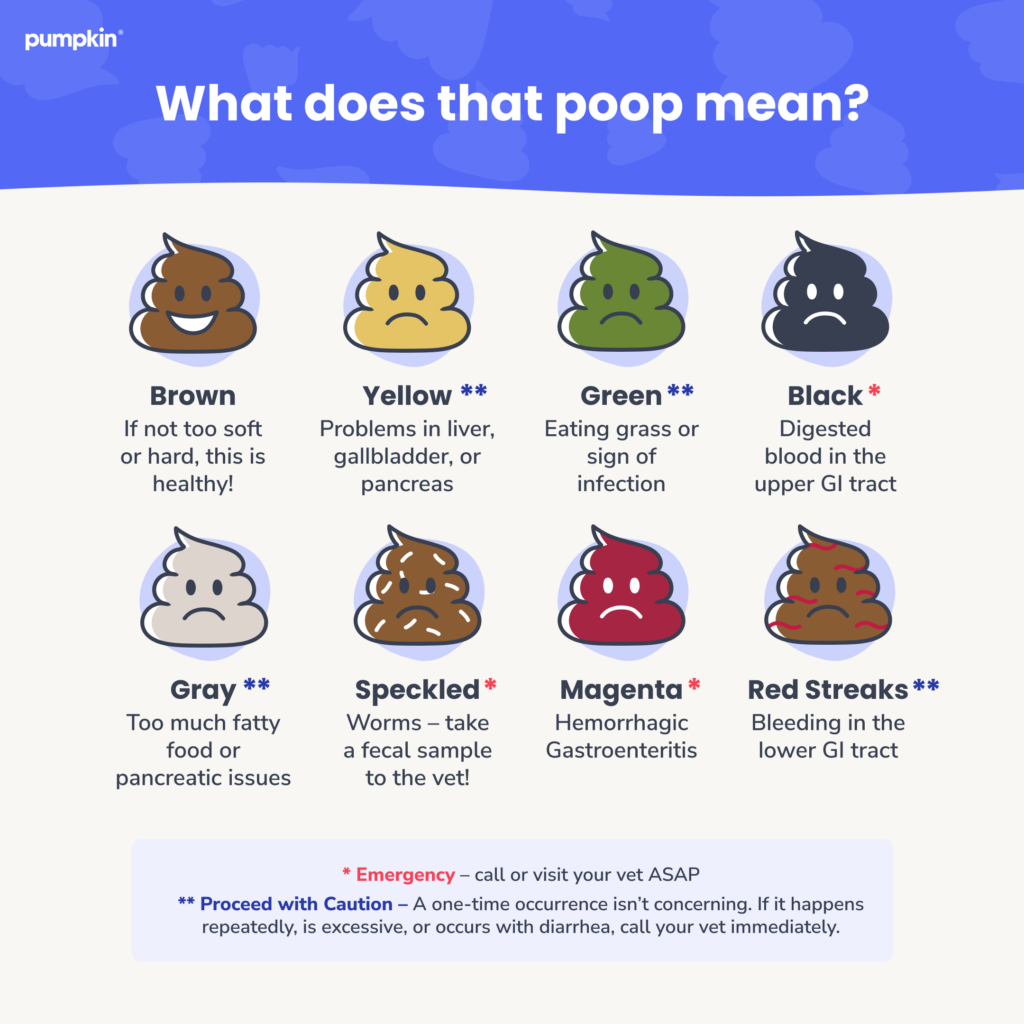
On any dog stool color chart, the healthy stool color is chocolate brown. According to PetMD, that color is created by bile pigments as food moves through the GI tract. If food moves too quickly, bile can't fully break down, so you get stool that is yellow. Grey or clay-colored stool and black, tarry stool carry their own warnings.
Yellow poop isn’t always harmless. "Yellow dog poop is often due to a disruption in digestion, something that speeds up the digestive process," explains veterinarian Dr. Chyrle Bonk, DVM. "This can be due to irritation from infection, foreign body, change in food, parasites, or eating something they shouldn't have. It can also be due to issues with the liver or gallbladder or something like inflammatory bowel disease."
Common causes of yellow dog poop
Just like human feces, dog poop can change color and consistency based on changes to diet, behavior, or hydration. Yellow stool may have specific causes such as:
Food intolerance or food allergies
Change in diet
Digestion issues
Bacterial or parasitic infection
Pancreatitis
Gallbladder issues
Liver issues
Inflammatory bowel disease
Irritable bowel syndrome
Intestinal worms like tapeworms
According to VCA Animal Hospitals, the parasite Giardia, which can be diagnosed with a fecal test, commonly causes soft, yellow, foul-smelling stool. Exocrine pancreatic insufficiency (EPI) is a condition in which missing digestive enzymes produce pale, greasy, yellowish stool from unabsorbed fat.
The Merck Veterinary Manual explains how liver, gallbladder, and bile-duct disorders change how bile reaches the intestine, which changes stool color.
Other symptoms to watch out for:
Lethargy
Lack of appetite
Weight loss
Constipation
Diarrhea
Upset stomach
Fever
Yellow color to the skin or eyes
Yellow poop accompanied by lethargy, fever, or abdominal pain could be a sign of a greater health issue, so be sure to keep a close eye on your dog's behavior. Always seek veterinary help if the yellow coloring of your dog's stool persists for more than a day or two.
Yellow stool does not mean your dog is jaundiced. The Merck Veterinary Manual explains that a yellow tint to the gums, eyes, or skin is a liver or bile-duct red flag needing an urgent vet visit.
What the shade of yellow tells you
Before scrolling through unhealthy dog poop pictures online, compare against this guide – yellow dog poop pictures vary with lighting, so judge texture too.
Shade and texture | Most likely cause | What to do |
Mustard yellow, soft or loose | Diet change, bland diet, fast digestion | Monitor 24–48 hours |
Bright yellow, formed | Food coloring, low-pigment food | Check ingredients; monitor |
Pale yellow, greasy, foul-smelling | Fat malabsorption (EPI, pancreatic disease) | Book a vet visit soon |
Yellow with mucus or blood | Intestinal inflammation, parasites, infection | Call your vet; same day if there’s blood |
If your dog has yellow dog poop with mucus, it may mean the intestinal lining is irritated. If there is persistent mucus in your dog's poop, you should discuss it with your vet, and if there's any blood in your dog's stool, your dog should be seen right away. Mustard yellow dog poop diarrhea, if you've just switched foods, will usually resolve on its own.
Yellow dog poop but your dog is acting normal
If you've searched "yellow dog poop but acting normal," you may already know that a dog with normal energy and appetite that only has one or two yellow poops almost always has a diet-related issue. In that case, even if it's diarrhea, you can monitor your dog at home for 24–48 hours.
One of my cases had yellow diarrhea and was acting a little lethargic, so I had the dog's parent bring him in right away. It turned out the pup had a nasty case of Giardia, which was easily treated with the medication.
Puppy vs. adult vs. senior dogs
Puppies
If you have a new puppy and it has yellow diarrhea, it must be seen right away. The AVMA warns that canine parvovirus can cause this in unvaccinated puppies, and it can be fatal without fast treatment. Puppies dehydrate quickly. This is another reason to keep vaccines on schedule.
When I was in veterinary school, we saw many puppies with parvo and, of course, kept them all together in an isolation ward. The foul odor was overwhelming, so that's another sign you can watch for.
Adult dogs
Healthy dogs most often develop yellow stool from diet changes, raiding the trash, and Giardia. Most can be treated with a bland diet.
Senior dogs
If you have a senior dog, you should be more cautious if you see recurring yellow or greasy stool. Seniors are more likely to have EPI, gallbladder problems, or liver disease than younger dogs. They should have a physical exam, fecal exam, and blood work.
When to see a vet (and emergency red flags)
Contact your vet for assistance if:
The yellow color is recurring or continues for more than a day or two
Your dog shows behavioral changes such as lethargy, lack of appetite, vomiting, or diarrhea
Your dog has a fever
If your dog has repeated vomiting, yellow gums or eyes, collapse, significant blood in the stool, or yellow diarrhea in a young puppy, head straight for the emergency room. Before you go, photograph the stool and bag a fresh sample (under 12 hours, refrigerated).
How vets diagnose and treat it – and what it costs
A stool sample will likely be required for your vet to further determine the cause of your dog's yellow poop. As a veterinarian, I'm always grateful when a dog parent brings a stool sample to the appointment, along with any notes they have taken. While we can always get a sample ourselves if needed by doing a rectal exam, it is easier on your dog if you bring your own.
Your vet may also perform blood tests to determine whether your pup has an infection or an underlying health problem. Depending on the cause, your dog may need deworming, nutritional supplements, or other treatment to help balance gut bacteria and get digestion back on track.
A dog’s yellow diarrhea treatment follows the diagnosis, and costs vary with the workup: a fecal test runs about $25 to $75, bloodwork $100 to $250, and an abdominal ultrasound $300 to $600. Pancreatitis care ranges from roughly $500 to $1,000 for outpatient treatment, and $2,000 to $5,000 or more with hospitalization.
What you can do at home
When your dog's poop turns yellow, start by observing your pup's diet. A change to their food is the most likely cause of their yellow poop. If the problem persists, try returning to their original diet and see whether their poop color returns to normal.
Dr. Bonk also recommends a bland diet if you think your dog's yellow poop is linked to food intolerance. "If your dog doesn't have any other signs, such as vomiting, a fever, stomach pain, or lack of appetite, you can try withholding food for 12-24 hours and pushing hydration," she explains.
"After the initial fast, start your dog back on a bland diet like chicken and rice. Feed small amounts of this bland food frequently throughout the day. Adding probiotics can also help."
In addition, if your dog has yellow poop, be sure to:
Offer them plenty of fresh water
Feed them a bland diet
Try probiotics
Keep a close eye on their bowel movements
How to prevent yellow dog poop
If your dog is used to a certain brand or type of dog food, a sudden change in diet could lead to yellow mucus or bile in your dog's stool. To prevent this, slowly incorporate new food into your dog's diet rather than abruptly changing what they eat. Plan on a 7–10 day transition. Beyond that: parasite prevention, yearly fecal checks, current vaccines, and no trash raids.
Yellow poop: usually a blip, sometimes a warning
Generally, yellow dog poop indicates a food intolerance or change in diet. If the problem goes away on its own, then yellow stool likely isn't a sign of deeper health issues. However, recurring yellow poop in your dog could signal more serious gastrointestinal (GI) tract issues or even liver disease.
It's always a good idea to check in with your vet if your dog has recurring yellow poops, or if major behavioral changes or other worrying symptoms accompany the stool change.
Frequently asked questions
Why is my dog's poop yellow but he's acting normal?
A short-lived yellow stool in a dog with normal energy and appetite is usually caused by a diet change or food moving through the gut too quickly. Monitor at home for 24–48 hours with water and a bland diet. If the color persists, recurs, or new symptoms appear, call your vet.
Is a dog's poop yellow with pancreatitis?
It can be. An inflamed or underperforming pancreas interferes with fat digestion, often producing pale, greasy, yellowish stool alongside vomiting, belly pain, or lethargy. That combination warrants prompt veterinary care, since pancreatitis can turn serious quickly.
What parasite causes yellow poop in dogs?
Giardia is the most common culprit. This microscopic protozoan irritates the small intestine and often produces soft, yellow, unusually foul-smelling stool. Dogs pick it up from contaminated water, soil, or feces. A fecal test confirms the diagnosis, and it's treatable with prescription medication – though reinfection is common, so follow-up testing matters.
Why is my dog's poop yellow even on a bland diet?
Yellow dog poop after chicken and rice is expected, not alarming. A bland diet is low in the pigments that normally darken stool, and it moves through the gut quickly, so bile has less time to turn things brown. This usually resolves as the gut settles; if yellow stool continues well after the transition back to regular food, check with your vet.