Key Points
Small dogs typically live longer than large dogs, often reaching 12–16+ years, while giant breeds may only live 8–10 years.
Rapid growth and accelerated cellular aging may make big dogs more vulnerable to cancer and other age-related diseases earlier in life.
Researchers are now testing a promising anti-aging drug, LOY-002, for large breeds that could help dogs live longer, healthier lives.
Anyone who’s spent time at a dog park knows a Chihuahua and a Great Dane can seem like entirely different animals, especially when it comes to lifespan. A Chihuahua may live 15 to 17 years, while a giant breed may live less than a decade.
That’s surprising because, in most species, larger animals live longer. Elephants outlive mice. Whales outlive rabbits. So why do small dogs outlive large dogs by five to eight years or more?
Scientists are still working on the answer, but research points to accelerated aging, cellular wear, and the biological cost of rapid growth. The encouraging news for large-breed owners is that researchers are now testing drugs designed to help big dogs live longer, healthier lives.
Whether you share your home with a Yorkshire Terrier or a Saint Bernard, understanding the science of canine aging can help you be a better advocate for your dog's health, and maybe even add a few more years together.
The size-lifespan paradox — why it seems backward
In the animal kingdom, larger species generally live longer. An elephant can live 60 to 70 years, while a mouse may only live two or three. This pattern holds across species after species, with bigger bodies equaling longer lives.
But within a single species, the opposite often holds true. Dogs are the clearest example. A Chihuahua and a Great Dane are both Canis familiaris, the same species, yet they can differ in lifespan by nearly a decade.
Science doesn't have a single definitive answer for why this happens, but there are several credible theories. The one thing researchers do agree on: large dogs quite literally age in fast motion compared to small breeds.
What the science says — theories behind the size gap
Evolutionary biologist Cornelia Kraus led a study of 74 breeds and more than 56,000 dogs that found large dogs age at an accelerated pace. Her research suggests that rapid growth early in life — for example, a Great Dane puppy gains around 100 pounds in their first year — leads to long-term consequences. The faster a dog grows, the more their cells replicate, creating more opportunity for errors, mutations, and damage to accumulate.
The leading hypothesis centers on metabolic demands. A larger body requires more cellular activity. Cells replicate more often, and oxidative stress accumulates faster. Large dogs' bodies work harder, and that wear and tear adds up.
One major study of 169,000 dogs by Dr. Silvan Urfer found that small dogs have a median lifespan of around 14.95 years, medium dogs around 13.86 years, and large dogs around 13.38 years. Giant breeds like Great Danes average around nine to 10 years, while Irish Wolfhounds average just six to eight years. Chihuahuas routinely live 15 to 17 years or more.
Large breeds also die from cancer at higher rates than small breeds. Since large dogs age faster, they may hit the cancer-vulnerable years sooner. However, in clinical practice, I’ve also seen young Great Danes that have no business developing cancer yet succumb to osteosarcoma by the time they’re two or three.
Research also shows that large dogs experience faster cognitive development and cognitive aging, suggesting the accelerated-aging effect extends beyond the physical.
Finally, breeds with larger breeding populations tend to live slightly longer — about three to six months on average — due to greater genetic diversity and lower inbreeding coefficients.

How long do dogs live? Lifespans by size
Here's a practical breakdown of typical dog lifespans by size category:
Toy/Small (under 20 lbs): 12–17 years
Chihuahua: 15–17 years
Yorkshire Terrier: 13–16 years
Dachshund: 12–16 years
Medium (20–50 lbs): 11–14 years
Beagle: 10–15 years
Cocker Spaniel: 10–14 years
Large (50–100 lbs): 10–13 years
Labrador Retriever: 10–12 years
Golden Retriever: 10–12 years
German Shepherd: 9–13 years
Giant (100+ lbs): 7–10 years
Great Dane: 7–10 years
Irish Wolfhound: 6–8 years
Saint Bernard: 8–10 years
It's worth noting that when dogs are considered senior also varies by size. Small breeds aren't typically considered seniors until around 10 years old, while giant breeds may reach senior status at just five or six.
Common health issues in small dogs
Small dogs may outlive their larger cousins, but they have their own breed-specific vulnerabilities. Dental disease is extremely common, as their crowded teeth make them prone to periodontal issues that can affect heart and organ health if left untreated.
Other frequent concerns include patellar luxation, or kneecap dislocation, which is common in Yorkshire Terriers, Chihuahuas, and Pomeranians. Tracheal collapse is another issue frequently seen in Chihuahuas and Pomeranians. Toy breeds are also more prone to hypoglycemia, while Cushing’s disease occurs more often in smaller dogs overall. Heart disease is another major concern, especially mitral valve disease in breeds like Cavalier King Charles Spaniels.
While small dogs may live longer, that doesn't mean they're low maintenance. Preventive wellness visits and dental care are just as important for them as for any other dog.
The factors any dog owner can control
Regardless of breed or size, certain factors meaningfully affect how long a dog lives, and these are all within your control.
Weight management is one of the most powerful levers you have. Overweight dogs have significantly shorter lifespans. In one study, an overweight Yorkshire Terrier averaged 13.7 years, compared to 16.2 years for a Yorkshire Terrier at a healthy weight.
Dental care plays a bigger role in overall health than many owners realize. Regular professional cleanings have been linked to improved longevity and lower health risks over time, as periodontal disease isn’t just a mouth problem. Oral bacteria can spread through the bloodstream and impact major organs like the heart, kidneys, and liver. Research shows that annual professional dental cleanings as part of comprehensive preventive care are associated with about a 20% reduction in mortality risk.
Regular vet visits are your best tool for early detection. Cancer, heart disease, and other age-related conditions are far more treatable when caught early. Diet quality supports overall health and immune function, while exercise keeps dogs strong and mentally sharp. Dogs that maintain muscle mass age better.
These factors won't override genetics entirely, but they stack. You can learn more about tracking your dog's age in human years and explore options for pet insurance for senior dogs to help manage the costs of age-related care.
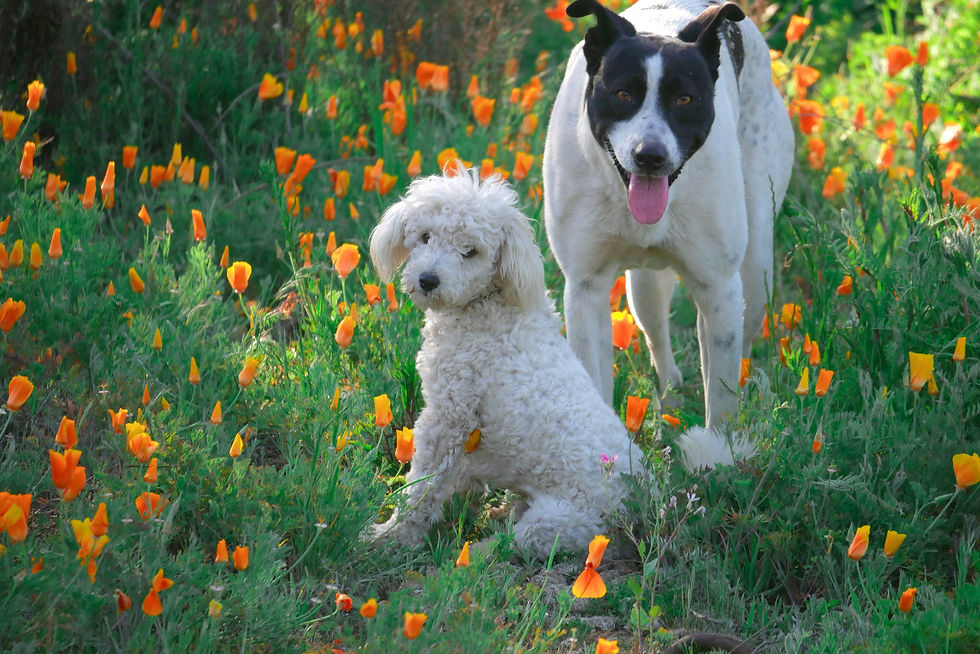
Could science help large dogs live longer? Meet Loyal.
For large-breed owners, the reality of a shorter timeline is hard to accept. But there's exciting research underway that could change the game.
Loyal, a San Francisco-based biotech startup, is developing a prescription drug designed to extend healthy lifespan in senior dogs. The drug, called LOY-002, works as a caloric restriction mimetic, achieving some of the biological benefits of a severely reduced-calorie diet (which extended dog lifespan by roughly two years in a landmark Purina study) without actually restricting food.
The drug targets metabolic dysfunction, an underlying driver of arthritis, cancer, cognitive decline, and other age-related diseases. By addressing that dysfunction, the hope is to delay or reduce the severity of the diseases that shorten large dogs' lives.
The STAY trial — described as the largest clinical trial ever conducted in veterinary medicine — has enrolled 1,300 dogs across 72 veterinary clinics nationwide. It's a randomized, double-blind, placebo-controlled study. As of May 2026, the study is roughly two and a half years in, with a minimum four-year run ahead. Early data has already detected at least a one-year lifespan difference between the treated and placebo groups.
Loyal is pursuing FDA conditional approval, a pathway for drugs that have cleared rigorous safety requirements, but whose long-term efficacy data is still being collected. If granted, this could allow LOY-002 to reach the market before the STAY trial concludes.
Keep in mind that there is no approved drug for dog longevity — yet. But for large-breed owners who have watched their dogs age too fast, this research represents genuine hope. The science of helping dogs live longer, healthier lives is advancing faster than ever.
Hope is on the horizon for large breeds
Whether you share your home with a Chihuahua who might be around for 17 years or a Great Dane who may make it to 10, understanding the science of canine aging helps you be a better advocate for their health. The gap between small and large breed lifespans is real and rooted in biology, but it's not entirely out of your hands.
Weight management, dental care, and consistent vet visits all move the needle. And with research like Loyal's LOY-002 clinical trial underway, the future looks brighter for large-breed dogs than it has in decades. So, if a giant breed’s shortened lifespan has put you off owning a larger-than-life companion, hope is ahead as we continue to explore exciting new options.

FAQ
Why do small dogs live longer than large dogs?
Scientists are still working on this, but the leading theories point to accelerated aging in large breeds. Large dogs grow faster and their cells may accumulate damage more quickly, making them more vulnerable to cancer and other age-related diseases at an earlier age.
How long do big dogs live?
Large breeds (50–100 lbs) typically live 10 to 13 years, while giant breeds (100+ lbs) often only reach seven to 10 years. Great Danes average around nine to 10 years; Irish Wolfhounds average just six to eight years. Individual dogs can exceed these averages with excellent preventive care, a healthy weight, and good genetics.
What are common health issues in small dogs?
Small dogs have their own breed-specific vulnerabilities. Dental disease is extremely common, since their crowded teeth make them prone to periodontal issues that can affect heart and organ health. Other frequent concerns include patellar luxation (loose kneecaps), tracheal collapse, hypoglycemia in toy breeds, and heart valve disease.
Is there a drug that can help dogs live longer?
A San Francisco biotech company called Loyal is developing a daily prescription pill called LOY-002, currently in the largest clinical trial ever conducted in veterinary medicine. Early results have detected at least a one-year lifespan difference between treated and untreated dogs. Loyal is pursuing FDA conditional approval, which could bring the drug to market before the trial's four-year minimum concludes.