Key Points
No, dogs cannot have Down syndrome. They have 39 pairs of chromosomes to our 23, and the condition is caused by an extra copy of human chromosome 21.
Several canine conditions, including congenital hypothyroidism, pituitary dwarfism, and hydrocephalus, can mimic the physical and developmental signs people associate with Down syndrome.
With early diagnosis, the right treatment, and a supportive home, dogs with genetic or developmental conditions can live full, happy lives.
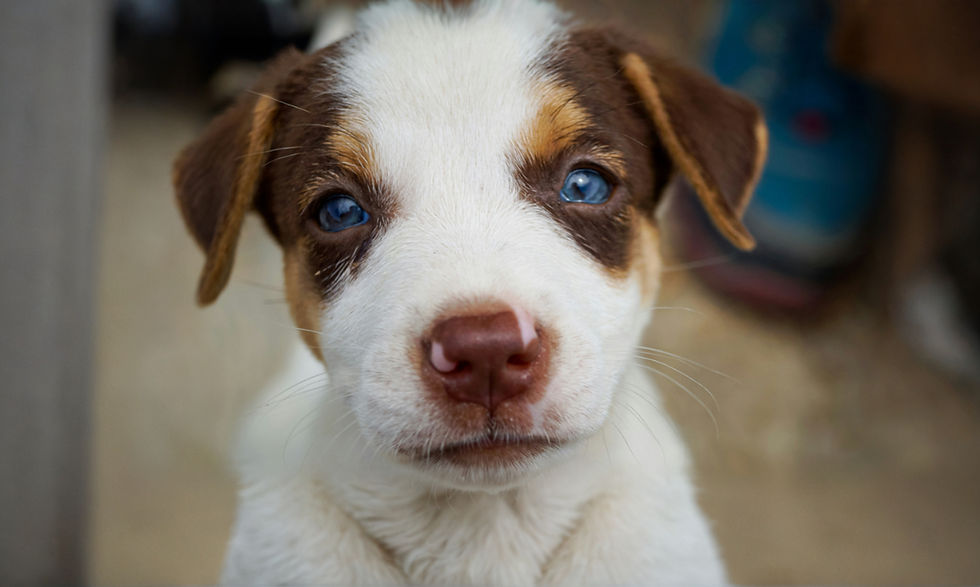
You bring home a new puppy, and something about them seems a little different. Maybe their eyes are set unusually wide, their tongue tends to peek out, or they hit milestones slower than their littermates did. A quick search for answers, and one phrase keeps surfacing: Down syndrome in dogs.
The reassuring truth is that dogs cannot have Down syndrome. The condition is unique to humans, tied to our specific genetic makeup, and it does not translate to canine biology. However, that does not mean that dogs do not develop similar conditions. In fact, several conditions can produce symptoms that look a lot like Down syndrome.
So if your dog seems unusual, the better question is not whether they have Down syndrome, but which condition might actually be at play. This guide breaks down the genetics, the look-alike conditions, the signs worth watching, and how to give a dog with special needs a happy, comfortable life.
What is Down syndrome?
Down syndrome is a genetic condition that occurs in humans when a person is born with an extra copy of chromosome 21, which is why it is also called trisomy 21. Most people have 23 pairs of chromosomes, whereas someone with Down syndrome has a third copy of the 21st, for a total of 47 instead of 46.
According to the National Down Syndrome Society, that extra genetic material changes how the body and brain develop, leading to characteristic features such as a flatter facial profile, an upward slant to the eyes, low muscle tone, and varying degrees of developmental delay.
Because Down syndrome is defined by that chromosomal change, it is a human condition by definition. To understand why it cannot occur in dogs, let’s look at canine genetics.
Can dogs have Down syndrome?
The short answer is no, dogs cannot have Down syndrome. Dogs have a completely different chromosomal blueprint than humans, consisting of 39 pairs of chromosomes, compared with our 23. Even when a dog is born with a chromosomal abnormality, it would not be the same condition, and there is no veterinary diagnosis of “canine Down syndrome.”
In my years as a veterinary technician, the question I heard more frequently wasn’t about Down syndrome, but another special needs condition: autism. Parents struggling with dogs who were averse to social interaction, exhibited obsessive behaviors, or startled at the slightest sound wanted an answer for their companion’s unusual behavior.
The honest answer there is the same: dogs can’t be formally diagnosed with autism either, though some do show the repetitive, socially withdrawn behaviors that veterinarians group under the term canine dysfunctional behavior.
Conditions that look like Down syndrome in dogs
When a dog has an unusual appearance or developmental differences, a veterinarian will look for one of several known conditions. The canine disorders that mimic Down syndrome are well documented, and these are the most common culprits behind a “Down syndrome” look.
Congenital hypothyroidism
A puppy born without enough thyroid hormone may grow slowly, develop short limbs, and have a broad head, a protruding tongue, and a dull or sluggish demeanor. Because thyroid hormone drives normal growth and brain development, a deficiency from birth produces many of the features people associate with Down syndrome. The good news is that hypothyroidism in dogs is often manageable with daily medication, and many dogs live normal lifespans.
Pituitary dwarfism
Pituitary dwarfism happens when the pituitary gland does not produce enough growth hormone. Affected dogs often keep a puppy-like appearance well into adulthood, hold on to their puppy coat or teeth, and may have a high-pitched bark. It shows up more often in German Shepherds and closely related breeds, where it can be passed down genetically.

Hydrocephalus
Sometimes called “water on the brain,” hydrocephalus is a buildup of fluid inside the skull that puts pressure on the brain. It can cause a domed or enlarged head, developmental delays, unusual behavior, and seizures in dogs. Small and toy breeds, particularly Chihuahuas, Pugs, and Yorkshire Terriers, are most prone to it.
Congenital heart defects
Some dogs are born with structural heart abnormalities that affect how efficiently blood moves through the body, leading to exercise intolerance, slow growth, and low stamina that may be mistaken for a broader developmental disorder.
Signs your dog may have a genetic or developmental condition
Many of the look-alike conditions share overlapping symptoms. Signs worth paying attention to include:
Stunted or unusually slow growth
A broad or domed head
A protruding tongue or unusual facial features
Poor muscle tone or coordination
Cloudy eyes or other eye problems in dogs
Low energy, sluggishness, or trouble keeping up
Delayed learning or house-training
Hearing or vision difficulties
None of these signs points to a single diagnosis on its own, and one quirky feature is rarely cause for alarm. But a cluster of them, especially in a young puppy, is worth a conversation with your veterinarian.
What to do if your dog shows these signs
If something seems off, the most important step is a veterinary exam. A vet can run bloodwork (including thyroid panels), imaging, and sometimes genetic testing to pinpoint what is going on. At-home dog DNA tests can offer clues about breed-linked risks, but they are not a substitute for a clinical diagnosis.
Early diagnosis is key to longevity. Congenital hypothyroidism, caught early and treated, may have little impact on a dog’s quality of life, while waiting can allow developmental effects to become permanent.
Can dogs help people with Down syndrome?
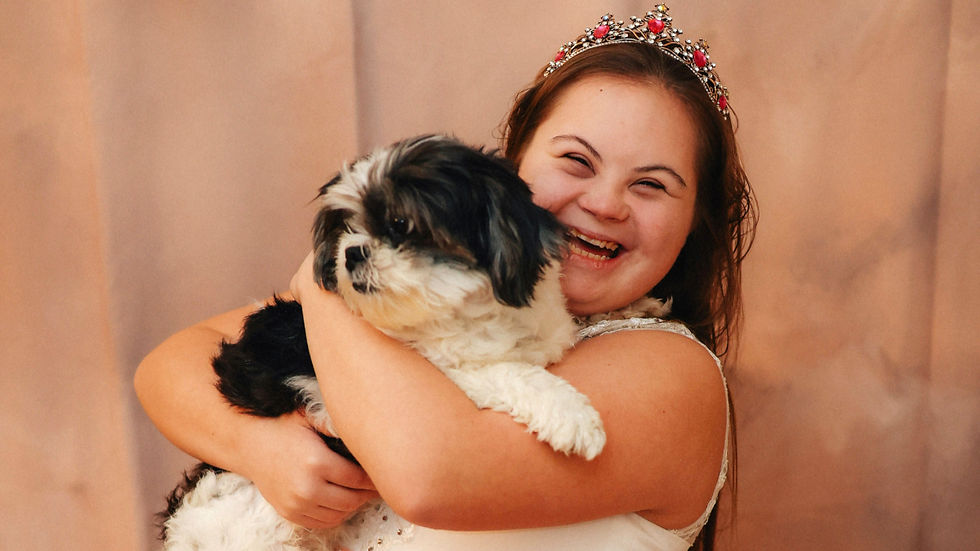
While dogs cannot have Down syndrome, they can be remarkable partners for the people who do. Trained service and companion dogs support children and adults with Down syndrome in meaningful ways, offering safety, encouraging independence, and providing steady emotional support.
Organizations that place service dogs for people with Down syndrome report boosted confidence, social connection, and daily routine for the people they are matched with.

Supporting your dog
While dogs cannot have Down syndrome, they can have similar, manageable conditions that need real care. A broad head, a slow growth curve, or a puppy that learns at their own pace does not mean a lesser life – just one that calls for closer attention and a vet you trust.
With early diagnosis, the right treatment, and a home full of patience, dogs with genetic or developmental conditions can live every bit as comfortably and joyfully as any other dog.
Frequently asked questions
Do certain dog breeds have a higher risk of Down syndrome-like conditions?
Yes. Toy breeds like Chihuahuas and Pugs are more prone to hydrocephalus, while German Shepherds see more pituitary dwarfism. Flat-faced (brachycephalic) breeds, such as English and French Bulldogs, can show more respiratory and developmental differences.
What is the life expectancy of a dog with a genetic condition?
It depends on the condition and how early it is caught. Dogs with well-managed congenital hypothyroidism often live normal lifespans, while a dog with severe hydrocephalus may have a shorter life but can still enjoy a good quality of life with proper care.
