Key Points
Dogs typically sigh because they're relaxed and content – a sigh as your dog settles down is most often a good sign.
A sigh is also a normal breathing reflex that reopens tiny air sacs in the lungs.
New or frequent sighing paired with noisy breathing, lethargy, or stiffness is worth a call to your vet.
Your dog has just finished a long walk, eaten dinner, and claimed the coziest spot on the couch. Then comes a sigh – a slow, heavy exhale that sounds a lot like someone settling in after a long day at work.
Most of the time, that sound means what it seems to. Dog sighing is usually a sign of comfort, and it's also part of how healthy lungs work. A sigh can carry other meanings, though, from mild disappointment to a breathing problem that needs a vet's attention. The difference usually comes down to context, so take a look at your dog's eyes, posture, and what just happened.
Here's what's behind the sound, how to read it, and which signs mean it's time to call your vet.
What is a sigh, really? The physiology behind the sound
Before it's ever a message, a sigh is a reflex. The lungs are lined with millions of tiny air sacs called alveoli, and during normal, shallow breathing, some of them partially collapse.
A sigh is the body's fix for shrinking air sacs, since an extra-deep breath pops the alveoli back open. Researchers mapping the brain circuit that controls sighing found that brainstem neurons trigger these breaths automatically. Sighing also tends to increase with stress and emotion, which explains why sighs show up at such telling moments.
The emotional reasons dogs sigh
Once the reflex is accounted for, most sighs fall into a few emotional categories.
Contentment and relaxation
If you've ever wondered, "Why does my dog sigh when she lays down?" the answer is usually a simple one. Your pup is comfortable, so a sigh while settling into a bed or your lap is the sound of a body relaxing.
Affection during cuddles
A sigh mid-cuddle tells you your dog feels safe enough to fully relax – one of the quieter signs your dog loves you. And if you're asking, "Why does my dog groan when I cuddle him?" that low rumble is usually a happy "ahh," too.
Disappointment or boredom
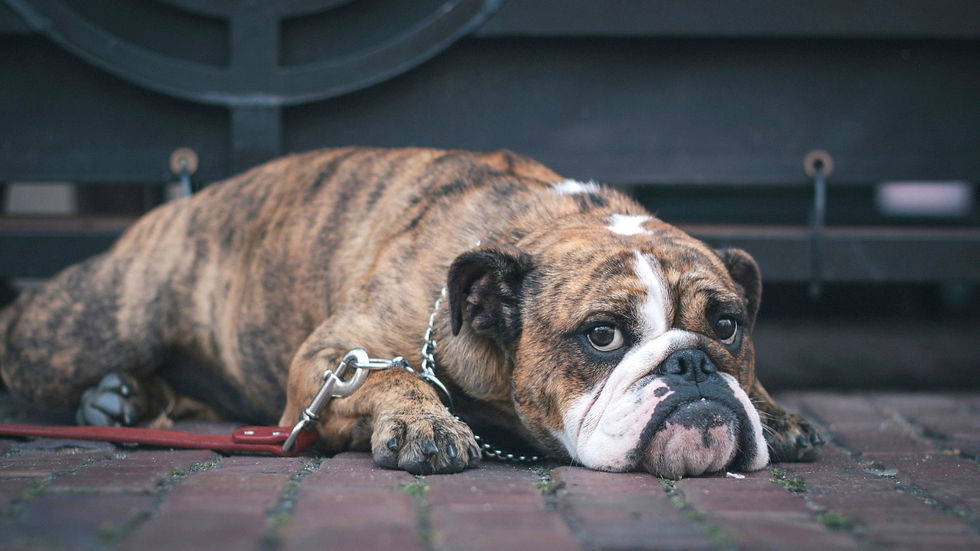
The walk didn't happen, or the treat went back in the bag. According to the American Kennel Club, a sigh with eyes fully open often signals disappointment rather than pleasure. If it comes with a pointed stare or a toy dropped at your feet, your dog may want some activity and is trying to coerce you with a huffed sigh.
My energetic border collie mix often sighed in disappointment when she would shake a toy at me, trying to get me to play while cooking dinner or folding laundry. While I’d rather play too, I’d have to tell her to wait, so she’d plop to the ground and let out a big sigh of disappointment while gazing sadly up at me.
Stress or mild anxiety
A sigh can also release tension after a vet visit or a thunderstorm. Frequent stress sighs alongside pacing, lip licking, or whining can point to dog anxiety worth addressing.
Dog sighing meaning: How to read the moment
The ASPCA recommends reading the body language of the whole dog – face, ears, tail, and posture – rather than a single signal.
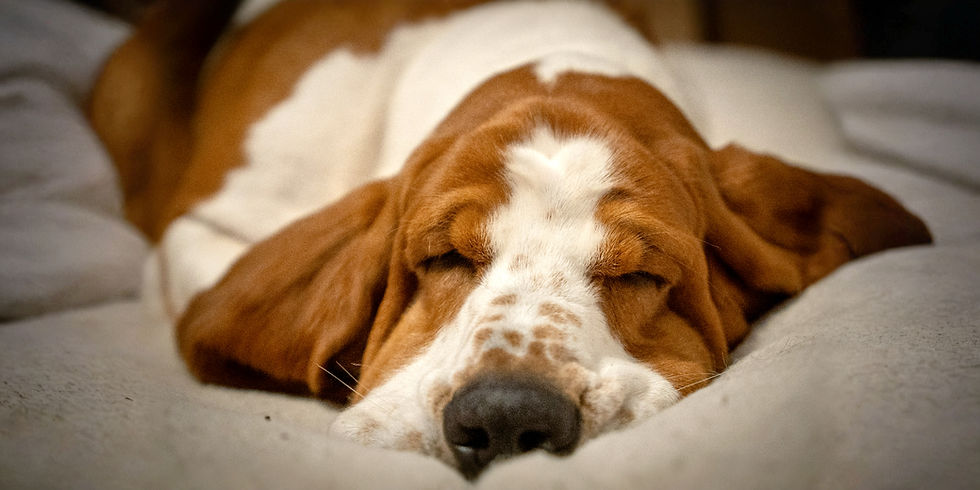
A content sigh tends to come with soft or half-closed eyes, a loose body sprawled across the floor or curled up beside you, relaxed ears, and a soft mouth. This is the dog who has just settled in and has nowhere else to be.
A disappointed or stressed sigh looks different. Your dog's eyes stay wide open, their body may be stiff, tucked, or restless, and you might notice ears pinned back or a quick lick of the lips.
So, do dogs sigh when annoyed? Sometimes. If your dog sighs during brushing or nail trims, then stiffens or turns away, they've likely had enough for now.
Sigh vs. other sounds: Groans, reverse sneezes, wheezes, and panting
When asking "Why does my dog exhale loudly?" it helps to know which sound you're hearing.
Sound | What it is | When to call the vet |
Sigh | One long, slow exhale, usually indicating contentment | Only if new, constant, or paired with other symptoms |
Groan | Low rumble while stretching, lying down, or enjoying a good scratch | With stiffness, limping, or trouble rising |
Reverse sneeze | Rapid snorting inhales from throat irritation | If frequent or with nasal discharge |
Wheeze | High-pitched whistle from narrowed airways | Soon, especially if breathing looks hard |
Panting | Fast, open-mouth breathing | If heavy at rest or in cool temps |
If you're wondering, "Why is my dog groaning while lying down?" a young dog is most likely just getting comfortable. In an older dog, a groan every time they settle can signal sore joints. If your pup’s a heavy breather, here are some possible reasons why your dog is panting.
Breed and age considerations
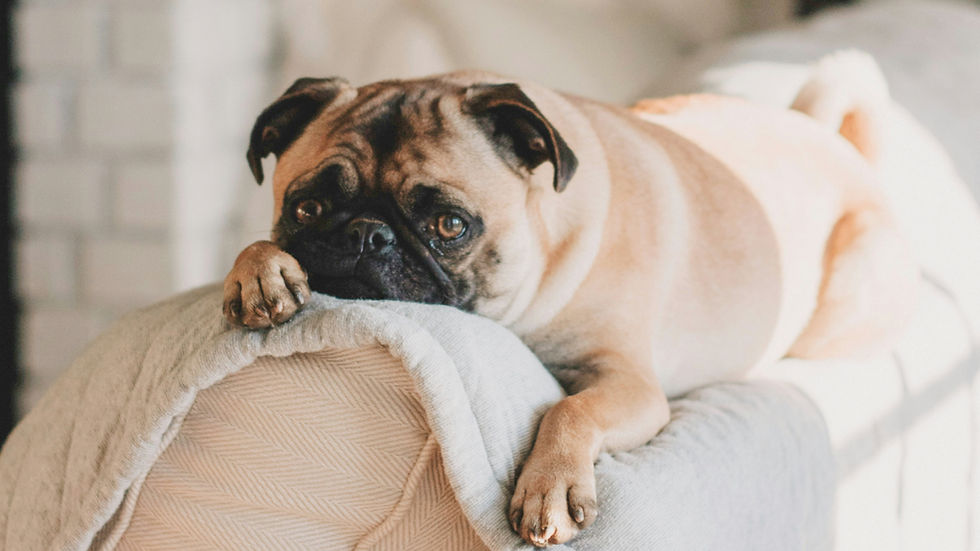
Flat-faced breeds like Pugs, French Bulldogs, and Shih Tzus often breathe noisily because of narrow nostrils and a long soft palate, a condition called brachycephalic obstructive airway syndrome (BOAS). In these dogs, what sounds like constant sighing may be the airway working too hard. Snoring, gagging, and heat or exercise intolerance are common BOAS signs, and if your dog sounds like they’re snoring while awake, ask your vet for an airway evaluation.
Senior dogs often sigh as they lie down or get up. If that comes with stiffness or reluctance to climb stairs, arthritis may be part of the picture.
When is a sigh a red flag?
A sigh alone is almost never an emergency. What matters is a change from your dog’s norm. Count their breaths while they rest for 30 seconds, then double it. Most healthy dogs take about 15 to 30 breaths per minute.
Contact your vet if sighing comes with:
Labored or noisy breathing at rest
Wheezing, gasping, or coughing
Pale or bluish gums (an emergency)
Lethargy or loss of appetite
Limping, stiffness, shaking, or repeated whining
Heave a sigh of relief
Most of the time, a sigh is your dog's way of saying, "I feel safe, and this is nice." Watch the eyes and body, know the red flags, and trust your instincts. While heavy panting, gasping, or other breathing difficulties are cause for concern, a gentle sigh is likely just one of the subtle ways dogs show love.
FAQ
What does it mean when your dog sighs deeply?
A deep sigh most often means your dog is relaxed and content, especially if it happens as they settle down near you with half-closed eyes. It's also a normal reflex that reinflates the lungs, so it's usually nothing to worry about.
Why does my dog sigh when I cuddle him?
Usually a sigh during cuddle time is born out of contentment and trust. If he stiffens or pulls away, he may have had enough handling for now and is asking for space.
Is it normal for dogs to sigh in their sleep?
Yes. Sleep sighs are part of normal breathing, as are those adorable little “whuffs” during a dream.
Can I stop my dog from sighing for attention?
Meet the need behind it with more interaction, such as through walks and play, and avoid rewarding sighs with treats.