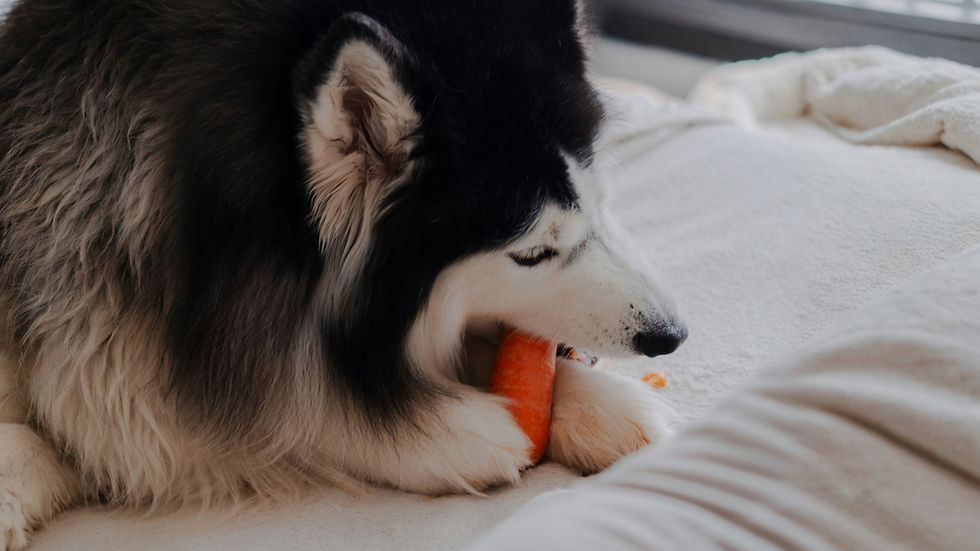
Key points
Yes, dogs can eat carrots. Plain carrots are a safe, low-calorie snack for most pups when you cut them to size and serve them in moderation.
Carrots bring vitamin A, potassium, fiber, and beta-carotene to the bowl, which is why they're such a popular treat.
Keep carrots to about 10% of your pup's daily calories, cut every piece to a safe size, and supervise while your dog eats.
Do you have a veggie-loving pup at your house? Some dogs only get excited for a bite of bacon, but maybe your dog has a taste for vegetables. That definitely makes sharing healthy treats easier! Before you hurt your arm patting yourself on the back, make sure you know which “healthy” foods are actually good for dogs.
Can dogs eat carrots? Yes! Carrots are a safe, healthy snack for dogs when prepared properly. So the question worth asking isn't only "can dogs have carrots," but how to serve them well. A carrot can be a loud, satisfying crunch or a soft orange coin that gently melts in a senior's mouth. The preparation changes the experience, and the safety.
Why dogs can eat carrots
Carrots are mostly water and fiber, with a little natural sweetness dogs tend to love. That gives a lot of chewing satisfaction for very few calories. The AKC notes they're low in calories and a good source of vitamin A, potassium, and fiber.
While a diet of carrots can't fix eyesight, they can support healthy vision when beta-carotene converts to vitamin A.
Nutrient | Approx. amount |
Calories | ~41 kcal |
Water | ~88% |
Carbohydrates | ~9.6g |
Natural sugar | ~4.7g |
Fiber | ~2.8g |
Potassium | ~320mg |
Beta-carotene | High |
Do carrots help clean a dog’s teeth?
Giving dogs carrots to help clean their teeth is a common practice, but the evidence doesn’t support treating ordinary carrots as a dental-care product. A 2022 study examining dog parents’ dental-care habits identified carrot feeding as a popular approach while noting that its effectiveness wasn’t supported by evidence.
Although some specially formulated dental chews have been shown to reduce plaque and tartar, those findings don’t mean an ordinary carrot offers the same benefits. For products with demonstrated dental benefits, check the Veterinary Oral Health Council’s list of accepted products.
Regular toothbrushing is still the most important part of your dog’s dental routine.
Can dogs eat carrots raw, cooked, or frozen?
Dogs can eat mature carrots or baby carrots. They can be raw, cooked, or lightly frozen depending on your dog’s needs.
Raw carrot pieces for the crunch lovers
A cold raw carrot has a loud, clean snap, and some dogs live for it. However, raw carrot is hard, and hard + round + gulped is how choking happens.
How to serve raw carrots safely:
Scrub a carrot under cold water. Peeling is optional; a washed skin is fine.
Cut whole carrots and sticks into bite-size pieces, because large or round chunks can lodge in the throat.
Skip raw sticks for dogs who gulp, and skip very hard pieces for puppies and seniors with delicate teeth. Watch carefully for the first few bites.
Steamed carrots for softer mouths
Steaming is the gentle option. A steamed carrot turns tender and a little sweeter, closer to a soft cooked sweet potato than a crisp vegetable. That softness is kinder to puppies, seniors, and gentle chewers who find raw too much work.
To steam: cut a carrot into coins, steam over simmering water for 8 to 10 minutes until a fork slides in easily, then cool fully before serving. Some studies show that for humans carrots may provide more nutrients cooked, but no studies have been published to show whether that holds true for pets as well. Either way, just be sure to serve carrots plain, without butter, oil, salt, garlic, onions, or other foods not safe for dogs.
Frozen carrots, carefully
There is a bit of disagreement on frozen carrots in the dog community. A chilled or frozen carrot can feel soothing on a teething puppy's sore gums, which is why some vets suggest them. On the other hand, that rock-hard frozen carrot can be a choking hazard and may damage teeth.
Instead, offer lightly chilled rather than frozen-solid pieces, and be sure to supervise. Be extra cautious with puppies and with seniors whose teeth are more vulnerable to a hard bite.
The general rule is that if you can’t make a dent in it with your thumbnail, it’s too hard for a dog’s teeth.
Carrot recipes and serving ideas for dogs
Each of these is a snack, a topper, or an occasional treat. None is a complete meal, and all of them count toward your dog's daily treat budget. A healthy treat is still a treat.
Tiny carrot training rewards
For a high-volume, low-stakes training reward, a carrot is hard to beat. Steam a carrot until just tender, cool it, and dice it into pea-size pieces. Soft pieces let your dog swallow fast and keep working without choking on a hard chunk, and a small handful can cover a whole session for just a few calories.
Carrot topper (no-cook)
The fastest way to make a plain dinner more interesting.
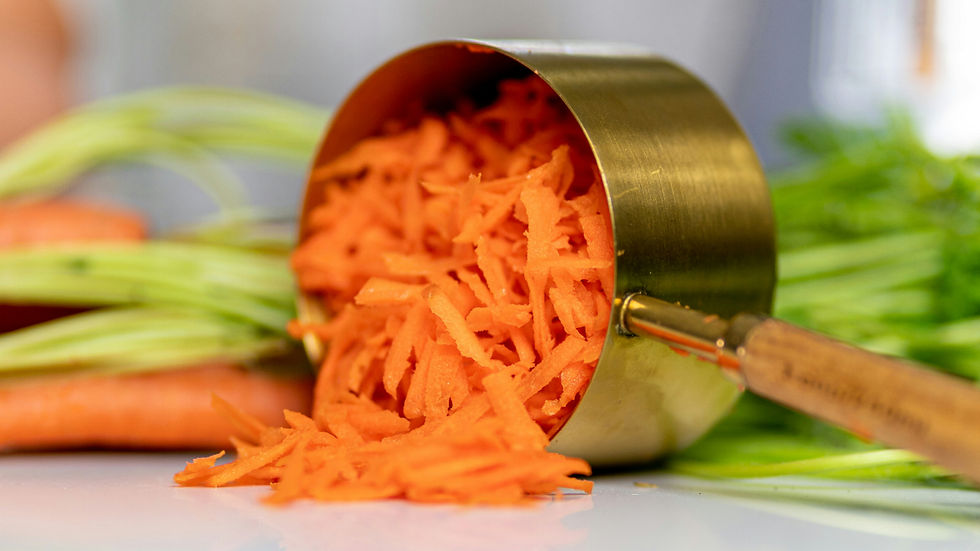
Finely grate about 1 tablespoon of raw carrot over your dog's regular food.
Grated carrot is a smart way to serve dogs who inhale their food, since there's nothing hard to gulp.
Baked carrot and oat treats
For a batch of chewy treats to keep on hand, this uses a few familiar dog-safe ingredients.
Ingredients:
1 cup finely grated carrot (about 2 medium carrots)
1/2 cup plain canned pumpkin puree, not pie filling
1 egg
1 and 1/2 cups rolled oats
Steps:
Heat your oven to 350F (175C) and line a baking sheet with parchment.
Stir the grated carrot, pumpkin puree, and egg together in a bowl.
Add the rolled oats and mix into a thick, scoopable dough. If it's too wet, add a few more oats.
Scoop small, bite-size mounds onto the sheet and press each one flat so it bakes evenly.
Bake for 20 to 25 minutes, until firm and lightly golden at the edges.
Cool completely on a rack before serving.
Store in the fridge for a few days or freeze them for later, just be sure to thaw them before feeding them to your pup.
How many carrots can a dog eat?
The right amount of carrots depends on your dog's size, weight, health, and the rest of their diet.
To estimate how many grams of carrots fit into your dog’s daily treat allotment: Multiply your dog’s daily calorie needs by 0.10, subtract any other treats, then divide by 0.41. This gives an estimated maximum amount of raw carrot in grams, assuming carrots are the only remaining treat.
For example, according to this calculator, a healthy, 50-pound spayed dog may need about 1,018 calories per day.
Step 1: Calculate the daily treat allowance.
1,018 × 0.10 = 101.8 calories from treats
Step 2: Subtract calories from other treats.
If the dog gets a dental chew containing 70 calories before bed:
101.8 − 70 = 31.8 calories remaining
Step 3: Calculate the equivalent amount of carrot.
Raw carrots contain approximately 0.41 calories per gram:
31.8 ÷ 0.41 = approximately 78 grams of carrot
That’s roughly one large carrot, depending on its size. For dogs watching their calories, carrots are a useful swap for richer treats. Just count them, since even a low-calorie snack adds up across a day of handouts.
Other dog-safe veggies to keep on hand
Carrots are only one of the human foods pets can eat. If your pup enjoys a bit of crunch or a fresh topper, these make good additions to the rotation:
FAQs
Can dogs eat raw carrots?
Yes, when washed, served plain, and cut into bite-size pieces. Supervise fast eaters and small dogs, and save very hard raw pieces for confident chewers rather than puppies or seniors.
Can dogs eat cooked carrots?
Yes. Steamed, boiled, or baked plain carrots turn soft and easy to chew, which suits puppies, seniors, and gentle mouths. Keep them plain, with no butter, oil, salt, garlic, or onion.
Can dogs eat frozen carrots?
It depends. A lightly chilled carrot can soothe a teething puppy, but a rock-hard frozen one is a choking or tooth-damage risk. Supervise, size the piece well, and choose lightly chilled over frozen-solid for gulpers.
Can puppies eat carrots?
Yes, in small amounts. Puppies can have small, bite-size pieces introduced gradually once they're on solid food. Soft steamed pieces are the easiest start. Ask your vet about timing.
How many carrots can a dog eat a day?
There's no universal number; it depends on your dog's size, weight, and diet. Keep carrots within the 10% treat rule, use the calculations above as a starting point, and let your vet fine-tune it.
Can dogs eat baby carrots?
Yes, when you cut them down to a size your pup can safely chew and swallow, rather than offering them whole.
So, can dogs eat carrots safely?
Yes. Plain carrots are a safe, low-calorie snack for most pups when you serve them in moderation and match the preparation to the dog: a firm raw stick for a crunch lover, a soft steamed piece for a senior, a tiny nub for training, a spoonful of grated carrot and pumpkin over dinner.
It’s tempting to give ourselves a pat on the back for choosing a healthy treat, but good intentions only go so far. What makes a food a good choice for your dog is how it fits into their life, from their individual needs to the way they eat it. Even a humble carrot is an opportunity to get to know your dog a little better.