Key Points
There are several different causes of dog rashes, including contact with something irritating, parasites, allergies, and infections.
If you have an idea of what caused your dog's rash and it's localized and mild, it can usually be watched at home for a day or two.
The location of the rash is one of your best clues, often accurately indicating the trigger.
What is a dog rash? (and why it happens)
Have you ever caught your dog licking, chewing, or scratching all night, keeping both of you awake? On closer inspection, you may have discovered a rash somewhere on your dog's skin. You probably wondered why your dog had a rash and very likely felt worried by it.
Finding the cause of a dog rash can be difficult, sometimes even for your veterinarian. Allergies, contact with an irritant, a bacterial or yeast infection, or parasites cause most rashes. As a veterinarian, I always emphasize to pet parents that they must find the cause to administer the proper treatment.
A list of the types of dog skin diseases with pictures, along with descriptions of the most common appearances, can be very helpful. The location of the rash can also help immensely. With this information, it's often possible to provide dog rash treatment at home.
Common types of dog rashes (with pictures)
Here are the types of dog rashes I see in practice: what each looks like, where it appears, how it's diagnosed, and how it's treated.
Allergic dermatitis in dogs (atopic + contact)
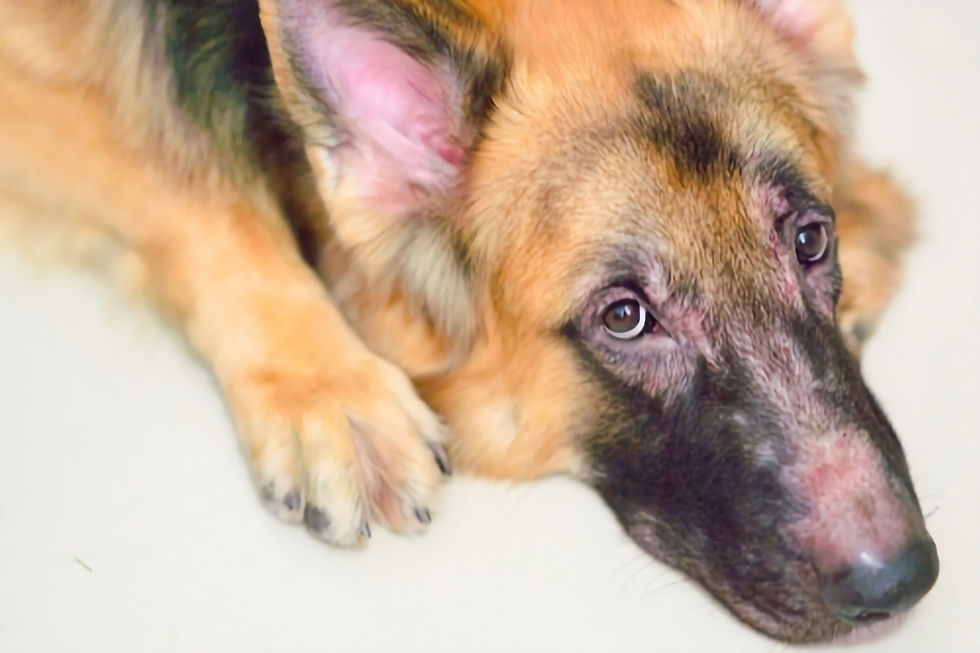
Allergic dermatitis is one of the most common causes of dog rashes, according to VCA Animal Hospitals. However, dermatitis simply means skin inflammation, so it's essential to find the underlying cause, which is most often allergies.
There are so many things your pet can be allergic to. Often, allergy testing is needed, and treatment can be a matter of trial and error. Be patient – it can be cured or successfully controlled once you find the cause.
There are four main categories of allergies in dogs:
Atopic dermatitis is caused by environmental allergens like pollen and dust mites.
Contact dermatitis is caused by direct contact between skin and an allergen like a new shampoo or cleaner.
Food allergy, which is just like it sounds: a reaction caused by something your dog is eating.
Flea allergy.
Allergies of all types can result in red, itchy, inflamed skin. They are diagnosed by allergy testing or improvement upon removal of the allergen. Treatment can vary from medication or shampoo that help stop the itch to removing the trigger to even allergy shots.
Flea Allergy
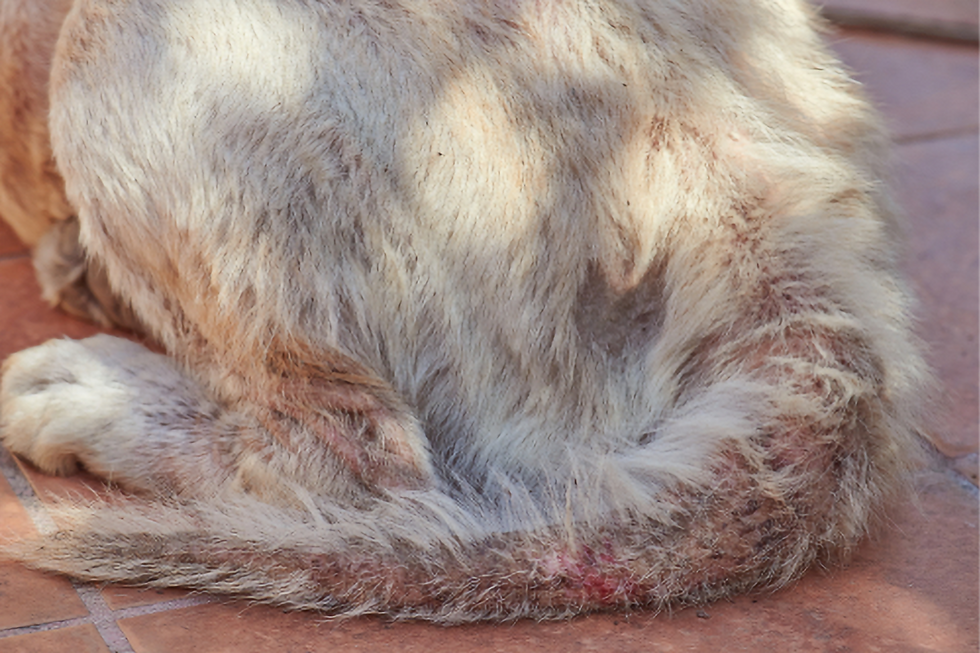
While fleas are annoying to all dogs, not all are allergic to them. Some dogs have a hypersensitivity to flea saliva, resulting in small, pimple-like red bumps usually found at the base of the tail.
One of the most common conversations I have with my clients is that it only takes one flea to cause intense itching in an allergic dog, and you probably won't even see that flea. Have you ever argued with your veterinarian that your house or dog couldn't possibly have fleas? It's happened to me many times when flea allergy was absolutely the cause of the dog’s itching. Understandably, no one wants to think that they have fleas in their house.
If you never actually see fleas, the diagnosis is made based on the response to flea control or an intradermal skin test. I strongly encourage you to use flea preventative year-round regardless of where you live if you have pets that are allergic to fleas. This can also help prevent tick-borne illnesses like Lyme disease.
Mite rashes/mange (sarcoptic & demodectic)

Mange, caused by mites, is described by the Merck Veterinary Manual as either: (1) Sarcoptic mange, which is more contagious and itchy, or (2) Demodectic mange, resulting in extreme hair loss in dogs with weak immune systems. Both need a vet diagnosis, performed by skin scraping. Treatments range from oral anti-parasitic medications to creams, shampoos, and sometimes antibiotics.
Bacterial infections (folliculitis, impetigo, and hot spots)
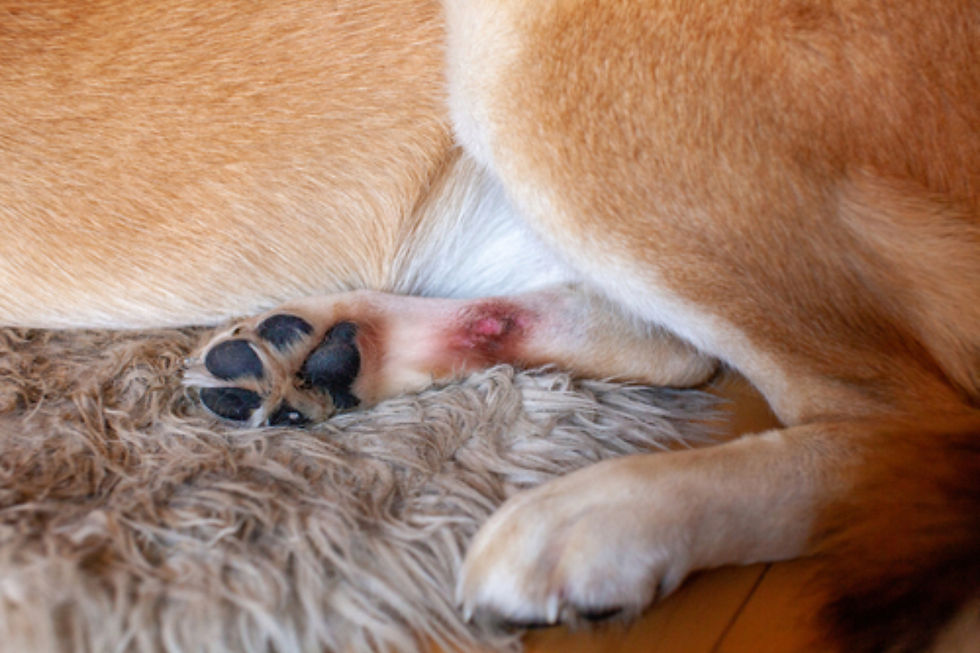
Bacterial infections appear as sores, pustules, or crusty scabs. Folliculitis is the inflammation of hair follicles, and impetigo affects the bare belly skin of puppies. Skin cytology is the diagnostic method.
Has your dog ever had a small, hairless red patch of skin at breakfast, and by dinnertime it had doubled or even tripled in size? It can be scary. Hot spots on dogs (acute moist dermatitis) can increase drastically in size over the course of only one day, but don’t be alarmed. Proper treatment, including clipping and cleaning the area, applying medication, and insisting your dog wear a cone to break the lick-scratch cycle, will take care of the problem.
Yeast/fungal infections
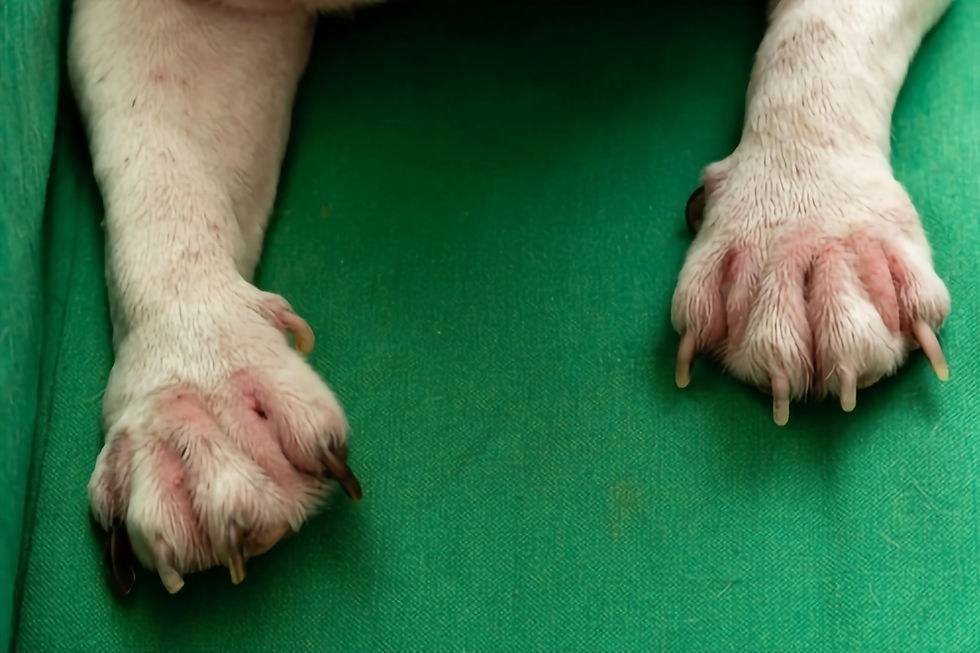
Yeast infections are most commonly found in the folds of the neck, groin, armpits, and between the paw pads. That's due to the warmth and moisture found in those areas. Greasy, itchy, thickened skin with a very unique odor almost confirms it (The odor is so strong and unpleasant that I can smell it across the exam room). Diagnosis is made with a simple tape test, and treatment is with antifungal shampoos or medication.
Ringworm
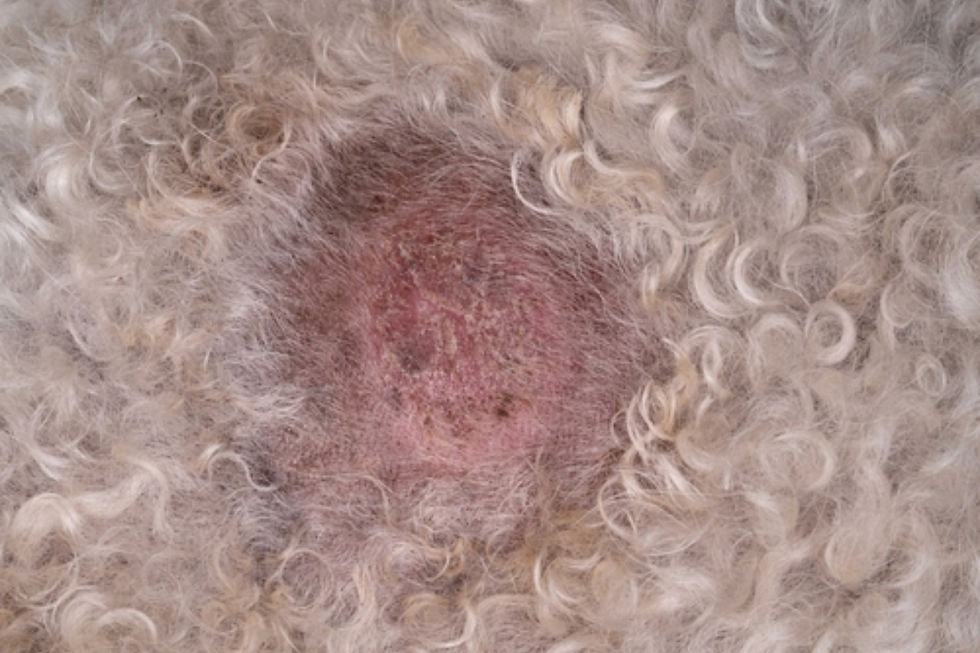
Ringworm is not a worm at all. If you thought that, don't be embarrassed. You're not the only one. However, it's a fungus. It got its name from its circular shape and raised edges that look similar to a worm curled beneath the skin. It is quite contagious to people and other pets. A fungal culture is the best diagnostic test.
Treatment includes antifungal medication, possible baths and dips, and extensive cleaning of bedding, brushes, and all areas of the home. Ringworm is more annoying than dangerous. Especially if you have multiple pets. I often get asked by dog parents to diagnose and treat their own suspected ringworm, but we're not allowed to do that. You'll need to see your own human physician.
Contact/environmental irritant rash & heat rash
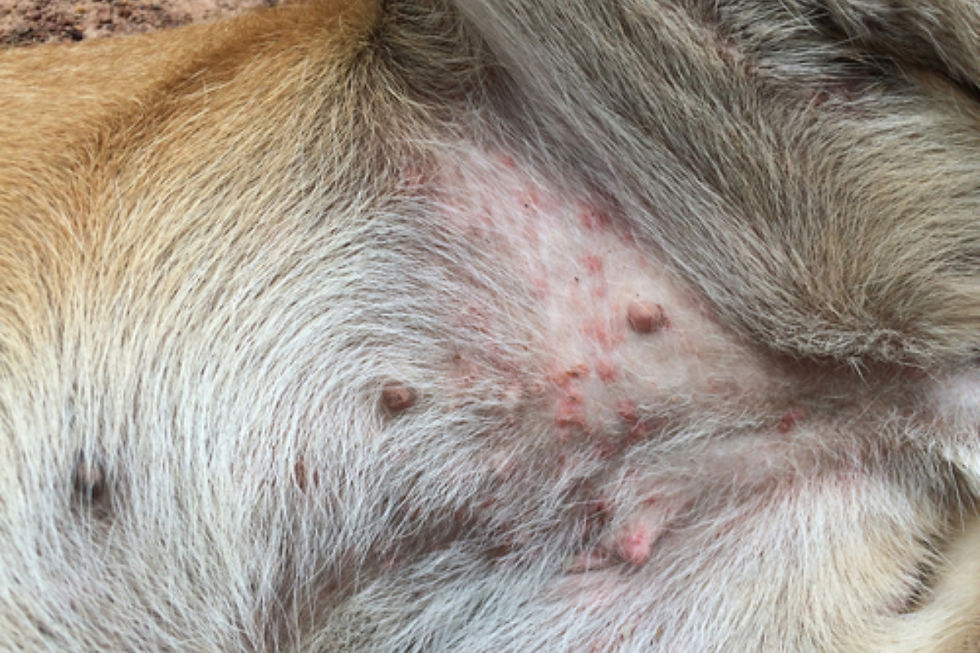
Lawn chemicals, harsh cleaners, certain plants, and hot, humid weather conditions can cause contact or heat rash. Often, this is a dog rash on belly skin. Consider what your dog has been lying on, as well as the heat and humidity. Rinse off the irritant and keep the area clean and dry. If it doesn't begin to improve, see your vet.
Canine skin autoimmune diseases
These skin conditions are rare, but can look similar to other skin disorders like hot spots and dermatitis. Cornell University's Riney Canine Health Center describes autoimmune diseases like pemphigus foliaceus as crusting, pustules, and sores, often starting on the face, ears, and paw pads. A biopsy is the only true diagnostic method.
Dog Rashes by Body Location
Body Location | Likely Triggers | What It Looks Like |
Belly & groin |
|
|
Paws (between the toes) |
|
|
Ears & ear flaps |
|
|
Tail base & rump |
|
|
Elbows & legs |
|
|
Facial folds & wrinkles |
|
|
Armpits & inner thighs |
|
|
Along the spine |
|
|
How to treat a dog rash
While treatment is most successful when you know the cause, there are some steps you can take that will help almost any mild rash on a dog.
Gently clean the area using a dog-safe cleanser.
Keep the folds of the skin, groin, and paws dry.
Keep a cone around your dog's neck to interrupt the itch-scratch cycle.
Review any new cleansers, shampoo, lawn treatment, or new surroundings.
As much as your dog dislikes wearing a cone, and as much as you feel bad that it has to be worn, the cone (Elizabethan collar) is the single most useful part of the treatment, so don't omit this step.
Another very important point is that rashes accompany many common skin problems in dogs, but the right treatment depends on the cause. You should never use human medications for your dog unless your veterinarian specifically tells you to.
When to see the vet
Every rash comes down to the same judgment call: can you manage this at home, or does your dog need to be seen? Here’s the framework I walk pet parents through if they call for advice.
You can start treating at home if…
It’s a small, mild patch and the skin isn’t broken
Your dog is otherwise bright, eating, and playing normally
There’s no facial swelling or hives
It improves within a day or two of gentle care
Call your vet if…
The skin is broken, oozing, bleeding, or smells
The rash is spreading quickly or covers a large area
It isn’t improving after two or three days of home care
Your dog is licking or scratching so hard they can’t rest
And when you’re genuinely on the fence, choose the visit. Skin problems caught early are simpler to treat, more comfortable for your dog, and easier on your wallet.
Seek emergency care right away if your dog has facial swelling, hives, or any difficulty breathing. These can signal a life-threatening allergic reaction. |

What to do next for your dog's skin
Often the worst dog rashes are created or made worse simply because your dog won't leave their skin alone. Acting early is essential. When in doubt, take a picture of your dog's skin and send it to your vet.
FAQs
How do I tell what kind of rash my dog has?
The way your dog's skin and fur look, and the location of the rash on the body, is a great first step. Recent history such as new products, parks, or parasites can be very helpful. If necessary, you can confirm a diagnosis with a vet exam and simple tests.
How can I recognize a fungal rash on my dog?
Circular patches of hair loss with light scaling at the edges often indicate ringworm. Yeast also looks greasy and red, with thickened skin and a musty smell.
What does a parasite rash look like on a dog?
Flea allergy rashes cause small, red, pimple-like bumps around the tail base. Mange, caused by mites, looks more raw and widespread, with patchy hair loss.