Key Points
Yes, cat zoomies are completely normal. They're sudden bursts of high-speed running called FRAPs (frenetic random activity periods), and most cats have them.
Zoomies tend to show up around dawn and dusk, right after using the litter box, or the moment your cat wakes from a nap, and they usually burn out within a couple of minutes.
Frequent or unusually intense zoomies paired with other changes in behavior can sometimes point to a medical issue, so it's worth knowing the difference between a happy sprint and a red flag.
Any cat owner who's been jolted awake by the sound of furry paws thundering down the hallway at 3 a.m. is familiar with this scenario: One second the house is silent, the next your cat is tearing around corners like they're being chased by something only they can see. Furniture gets used as a launchpad. The hallway becomes a racetrack. And then, just as suddenly, it's over, and your cat is sitting there looking perfectly composed, as if nothing happened at all.
This behavior is typically called “the zoomies,” or a FRAP, which is short for frenetic random activity period. It's one of the most universally recognized cat behaviors, but it can also be misunderstood. New cat parents often wonder if something's wrong, while more experienced pet parents tend to just accept it as part of life with a cat.
Fortunately, zoomies are, in almost every case, a completely normal outlet for a cat's energy, instincts, and mood. Understanding why they happen, when they tend to strike, and what (if anything) should raise a flag can help you feel confident every time your cat channels their inner racehorse.
What are cat zoomies?
Zoomies describe the short, intense bursts of running, jumping, and general chaos that cats display seemingly out of nowhere. Veterinary behaviorists call this a FRAP because it captures exactly what's happening, with fast, energetic activity that starts and stops with no obvious trigger. Cat behavior consultant Jackson Galaxy shares an enlightening explanation of feline zoomies and how to handle them in this video.
During a FRAP, a cat might sprint from room to room, dart up and down stairs, climb the cat tree in one bound, or skid around a corner at full speed. Some cats add sound effects, like a low growl or an excited chirp. Others incorporate props, batting at a toy or knocking a pen off the counter mid-run. It can look wild, but paired with the rest of your cat's body language, it's a normal part of feline behavior, not a sign of distress.
Why do cats get zoomies? Top triggers
Zoomies usually come down to one core cause: pent-up energy that needs somewhere to go. Cats are built to be efficient predators, with short, explosive bursts of speed rather than long stretches of steady activity. In the wild, that energy would go toward stalking, chasing, and pouncing on prey. Indoor cats still have that same instinct, but fewer built-in opportunities to use it, so it comes out in the form of a spontaneous sprint.
A few common triggers include:
Pent-up energy from a long day of napping or being left alone
Excitement or overstimulation after play, petting, or a new sight or sound
Waking up from a deep sleep with a sudden surge of energy
Stress or nervous energy release, especially after a startling moment
A natural predatory instinct kicking in, even without prey around
Why does my cat get the zoomies after pooping?
Post-poop zoomies are common enough to have their own name in some cat-parent circles, and they show up right after a trip to the litter box. A few theories help explain the behavior.
Relief might be a cause: A full colon can be mildly uncomfortable, and cats may feel a rush once that's resolved. Others suggest it's about vulnerability. In the wild, using the bathroom leaves a cat exposed to predators, so darting away afterward could be an instinctive move to safety. It's also possible that the physical act of pooping stimulates the vagus nerve, triggering a burst of nervous system activity.
In most cases, post-poop zoomies are nothing to worry about. The exception is if your cat seems to strain, cry out, or show discomfort around the litter box, which is worth mentioning to your veterinarian regardless of whether zoomies follow.
Do zoomies mean my cat is happy?
While not necessarily happy in the sense of contentment, zoomies are still generally a sign that your cat feels comfortable enough in their environment to let loose. A cat who's anxious, in pain, or feeling unsafe is far more likely to hide than to sprint through the living room. So although a FRAP isn't quite the same as a cat curled up purring on your lap, it does suggest your cat feels secure enough to be playful and expressive.
That said, zoomies can occasionally be tied to stress or overstimulation rather than pure joy, especially if they happen right after a startling noise or an intense petting session. Context is important, so read the situation, too. A cat who zooms after a nap or a good play session is likely just working off energy, while a cat who zooms after something like a loud noise may be releasing nervous tension. It's a similar principle to why your cat stares at you – the behavior itself isn't the full story, so it helps to look at what surrounds it.
How long do cat zoomies last?
Most zoomies are brief, typically lasting anywhere from a few seconds to two or three minutes. Cats tend to burn through that burst of energy quickly, then settle back into their usual routine as if nothing happened, whether that's grooming, eating, or heading back for another nap.
If the running seems to go on much longer than a few minutes, happens many times throughout the day, or seems to leave your cat unusually exhausted or disoriented afterward, keep an eye on the pattern and mention it at your next vet visit.
Cat zoomies at night – why it happens and how to manage it
Cats are crepuscular by nature, meaning they're biologically wired to be most active at dawn and dusk. That instinct doesn't disappear just because your cat lives indoors, which is why so many pet parents deal with zoomies right as they're trying to fall asleep, or right as the sun comes up.
A few strategies can help shift that energy to a more convenient time:
Schedule an active play session with a wand toy or laser pointer in the early evening, ideally a couple of hours before bedtime.
Offer a substantial meal after that play session, since eating after "hunting" mimics a natural wind-down cycle.
Enrich your cat's daytime environment with climbing spaces, window perches, and rotating toys so energy gets used earlier in the day.
Avoid engaging directly with nighttime zoomies (chasing your cat can accidentally reward the behavior).
Consistency helps here. A predictable evening routine that includes play and a meal can go a long way toward reducing 3 a.m. wake-up calls.
When to worry – zoomies vs. medical issues
The vast majority of zoomies are simply a healthy cat being a cat. However, a few patterns are worth flagging to your veterinarian, such as:
Zoomies that happen much more frequently than before, or seem to escalate in intensity
Signs of disorientation, stumbling, or wobbliness during or after a FRAP
Zoomies paired with other new symptoms, like increased appetite, weight loss, or excessive vocalizing (which can sometimes point to hyperthyroidism, especially in senior cats)
Aggression or unusual vocalization during the episode
Any sign of pain, limping, or reluctance to jump after a burst of activity
Senior cats who suddenly develop frequent, frantic bursts of activity after years of a calmer routine are worth a vet visit in particular, since this shift can sometimes be an early sign of an underlying condition rather than simple exuberance.
Kittens, on the other hand, tend to have the most frequent and dramatic zoomies of any life stage, simply because they have the most energy to burn and the fewest ways to burn it independently. If zoomies show up alongside other new or unusual habits, this rundown of common cat behavior issues can help you figure out what's worth a closer look.
Zoomies themselves aren't typically dangerous, but the environment around them can be. A cat sprinting full speed through a cluttered room risks knocking over furniture, breakable items, or even themselves off a ledge. Accidental injuries like these are a common reason pet parents end up at the vet, and they're also a common type of pet insurance claim.
How to redirect your cat's zoomies
Since the energy behind zoomies is completely natural, the goal isn't to eliminate the behavior, but to give it healthy outlets throughout the day:
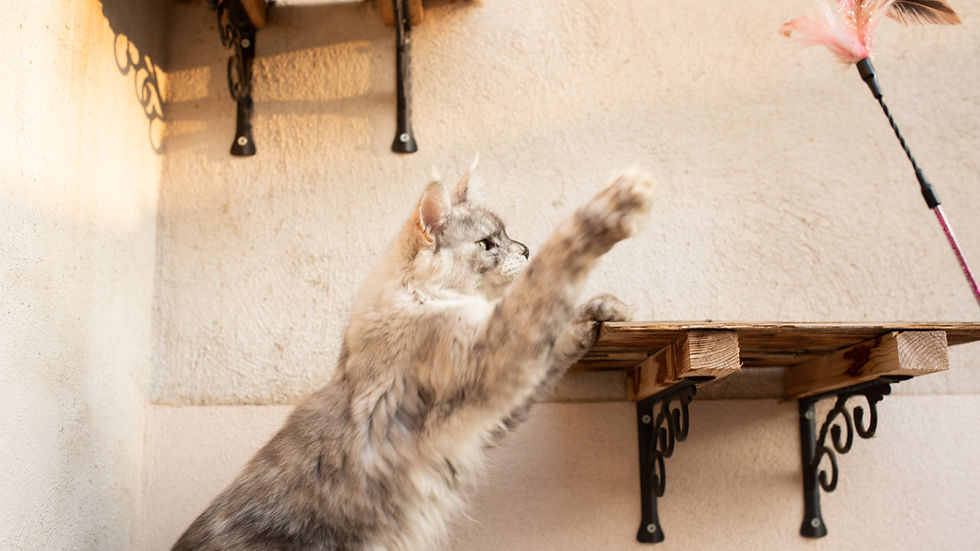
Schedule two or three short, active play sessions daily using wand toys, feather teasers, or anything that mimics prey movement.
Rotate toys weekly to keep things interesting, since cats can lose interest in the same one or two options.
Add vertical space, like a cat tree or wall shelves, so your cat has more terrain to explore and burn energy on.
Use puzzle feeders or treat-dispensing toys to combine mental stimulation with physical activity.
Consider a second cat if your household and current cat's temperament are a good fit, since play between cats can burn energy that a solo cat would otherwise save for a solo FRAP.
Investing a little extra time in structured play and enrichment tends to shift zoomies from surprise 3 a.m. events to a more predictable part of your cat's daily rhythm, and it can also strengthen your bond with a fellow feline family member in the process, alongside other everyday bonding behaviors like cats licking their owners
.
For more ideas on keeping your cat engaged between sessions, check out these DIY cat toys you can make at home.
Embrace the zoom
Zoomies are one of the more entertaining parts of life with a cat, and in nearly every case, they're simply a sign of a healthy, comfortable animal working off a burst of energy. Understanding the timing, the common triggers, and the handful of scenarios where a vet visit makes sense means you can enjoy the show instead of second-guessing it.
FAQ
Do zoomies mean my cat is happy?
Not exactly, but zoomies usually mean your cat feels secure enough in their environment to be playful and expressive. Zoomies tied to stress or a startling moment are the exception rather than the rule.
Why does my cat get the zoomies after pooping?
Possible explanations include relief after using the litter box, an instinct to move away from a vulnerable position, or nerve stimulation triggered by the act itself. It's a common, generally harmless behavior.
How do I stop my cat from getting zoomies at night?
An active play session followed by a meal a couple of hours before bedtime can help redirect that natural dawn-and-dusk energy to a more convenient time of day.
Are zoomies more common in kittens?
Yes. Kittens tend to have the most frequent and dramatic zoomies of any life stage since they have abundant energy and fewer independent ways to burn it. Zoomies typically become less frequent, though rarely disappear entirely, as cats mature.