Key points
The best dog training collars are the ones that fit your dog's size, temperament, and training goal.
Most dogs can start with a gentle option like a martingale collar, front-clip harness, or head halter.
Leading veterinary behavior groups recommend reward-based training over aversive tools – like prong, choke, and shock collars – because they can increase fear, stress, and aggression.
Whatever collar you choose, fit it carefully and pair it with rewards. If a behavior problem isn't improving, bring in your vet or a certified force-free trainer.
Loose-leash walking is a skill, and it takes practice, especially if you have a hyperactive Lab, a scent-driven hound, or a reactive pup who lunges at every stranger on the sidewalk. After enough walks that end in a sore shoulder, most pet parents start wondering whether a different collar would help.
Search for the best dog training collars, though, and you'll find pages of remote collars built for hunting dogs and products that promise results in days. However, very little of it answers what you actually want to know: which tools are safe, which ones actually work, and which ones can make a behavior problem worse.
No single collar works for every dog. A training collar for a yappy Chihuahua looks nothing like one built for a powerful 90-pound retriever, as the tool that helps with pulling won't do much for barking.
This guide explores the collar types themselves, the best picks for common training goals, what veterinary research says about e-collars, and how to tell when a behavior problem needs a professional.
What is a dog training collar?
A dog training collar is any collar, harness, or head halter used to guide behavior during training. Some give you better physical control. A front-clip harness, for example, gently turns a pulling dog back toward you.
Others work by creating an unpleasant sensation when the dog does something unwanted, such as tightening, pinching, vibrating, or producing electric stimulation. These collars are termed aversive tools, and it’s where most of the training collar debate lies.
A training collar is not a substitute for training. No collar teaches a dog what you actually want them to do. That comes from practice, consistency, and rewards, whether you're working on loose-leash walking or tricks to teach your dog.
Types of dog training collars
Walk down the collar aisle and you'll find a dozen designs that all look vaguely similar and do very different things. Here's how the most common types work.
Flat collar
This is the everyday buckle or snap collar. It works well for ID tags and casual walks with dogs who don't pull hard. A strong puller, though, can put steady pressure on their throat.
Martingale collar
A martingale tightens a limited amount when the dog pulls, then loosens again. It's popular for sighthounds like Greyhounds and Whippets, whose narrow heads can slip out of flat collars. When fitted properly, it can't tighten enough to choke.
Training harnesses
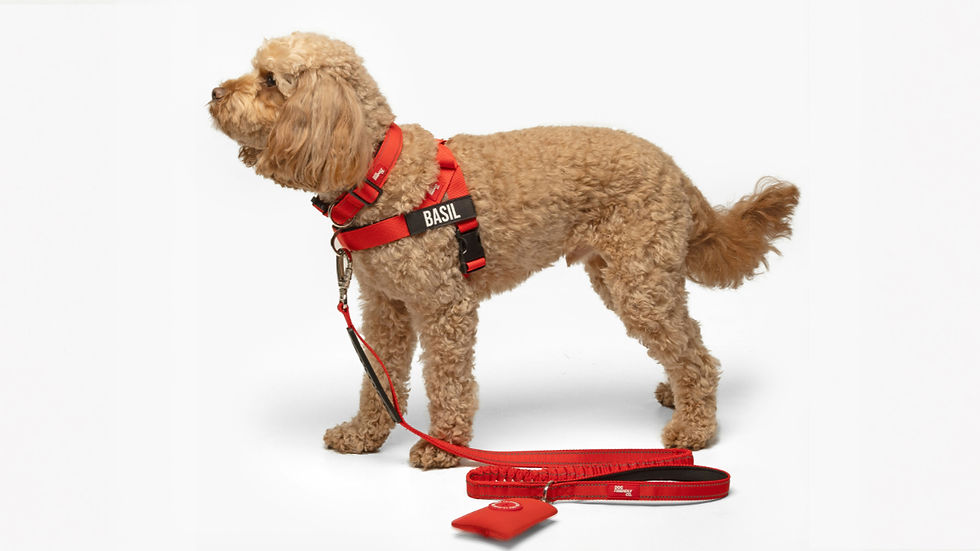
Harnesses spread pressure across the chest and shoulders instead of the neck. Common styles include:
Standard harness: For everyday comfort and control
No-pull harness: Designed to discourage pulling, often with a chest clip
Front-clip harness: Turns a pulling dog sideways toward you
Back-clip harness: Comfortable, but may encourage pulling
Dual-clip harness: Front and back rings for flexible control
Step-in harness: Easy on and off for dogs who dislike things over their head
Vest harness: Padded coverage that’s good for small or delicate dogs
Escape-proof harness: An extra belly strap for Houdini types
Figure-8 harness: A simple two-loop design that can rub if poorly fitted
Head collar or head halter
A head halter loops around the muzzle and behind the ears, so your dog's body follows wherever their head is steered, similar to a halter for horses. It's highly effective for strong pullers. Introduce it slowly with treats, since many dogs paw at it at first, and never jerk the leash while your dog is wearing one.
Slip collar
A slip collar is a loop of rope or nylon with no stop. Vet clinics and shelters often use them for quick handling, but they aren't a good choice for everyday training because nothing keeps them from tightening too far.
Choke collar or choke chain
A choke chain is a metal chain that tightens around the neck when the leash is pulled or jerked, placing it in the category of an aversive tool. Repeated neck pressure can also be risky for dogs with airway or neck problems.
Prong collar
A prong collar has metal links with blunt prongs that pinch the neck when tightened. Classified as an aversive tool, prong collars are generally not recommended.
Vibration collar
These remote collars use only vibration and/or tone, with no static stimulation. They're lower on the aversive scale, though some sensitive dogs still find vibration startling.
E-collar
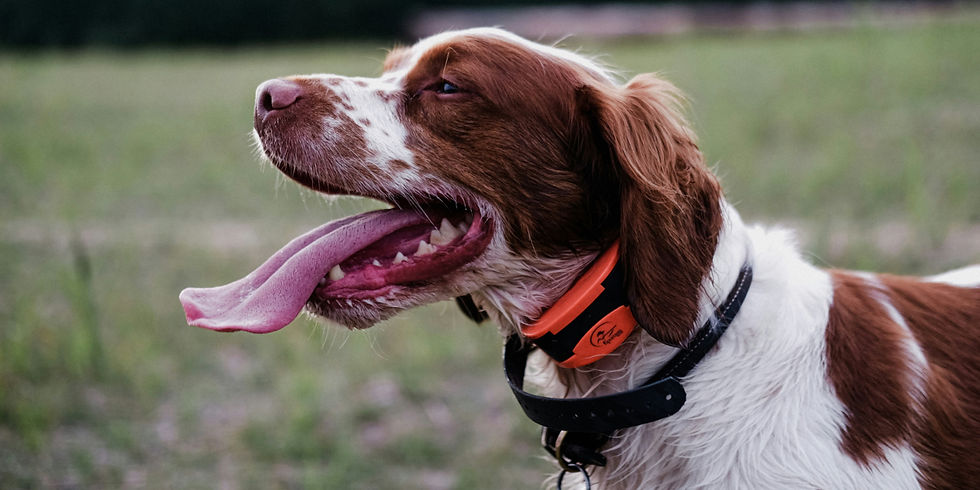
A remote electronic collar, often called a shock collar, delivers static stimulation at the press of a button. Many models also offer tone and vibration modes. Automatic bark collars fall into this category.
Best dog training collars by need
The best pick depends on the problem you're trying to solve. Here are the collar types and features to look for, starting with the gentlest option that fits the job.
Training tools for leash pulling
To keep your dog by your side, a front-clip harness is often the top choice. For large, powerful pullers, however, a head halter gives more control with less effort. Pair either tool with treats for walking beside you, and your dog will learn that a loose leash leads to a reward.
Best training collar for stubborn dogs
A dog who seems stubborn is often distracted or not motivated enough by what you're offering. Before changing tools, try higher-value treats and shorter training sessions.
Training tools for large dogs
Many owners of big dogs search for the best shock collar for large dogs. A dog's size isn't a reason to use a more aversive tool, though. Large breeds often do very well with head halters, dual-clip harnesses, and plenty of positive reinforcement.
Training collar for small dogs
Small breeds like Yorkshire Terriers, Pomeranians, and Chihuahuas are prone to tracheal collapse, so keep pressure off the neck. A lightweight vest or step-in harness is usually the best choice for these petite pups.
Best dog training collar with remote
The best e-collar for dog training is one you rarely need to use at more than a tone or buzz. Look for vibration and tone modes, clearly marked intensity levels, and a range that matches your setting (backyard vs. open trail). The collar should also be lightweight enough for your dog to wear comfortably.
A remote tone can even be trained as a positive cue: beep, then a treat. That makes it a handy long-distance "come here" signal.

Top training collars for barking
Automatic bark collars treat the symptom, not the cause. Dogs bark from boredom, fear, alertness, and sometimes pain, so start by figuring out why your dog is barking. Management often works better than punishment, like closing the curtains on a busy street and turning the TV on when you’re gone.
How to choose the right training collar
Before buying anything, think through:
Your goal: Are you trying to manage pulling, recall, jumping, or barking?
Size and build: Small dogs need less neck pressure, and large dogs need durable hardware.
Age: Puppies should stick to flat collars and harnesses, and seniors with arthritis or neck pain do best in padded harnesses.
Temperament: Sensitive or anxious dogs can shut down or become fearfully reactive with aversive tools.
Health: Tracheal collapse, flat-faced (brachycephalic) breeds, neck or spine issues, and sensitive skin all call for extra care.
Fit matters as much as type. You should be able to slide two fingers under a flat collar or harness strap. Check regularly for rubbing under the legs and behind the ears.
Are training collars safe? Risks and the vet perspective
It depends on the tool and how it's used. Gentle tools like harnesses and martingales are low-risk when fitted well. Aversive tools are where veterinary experts urge caution.
In its 2021 position statement, AVSAB recommends that dogs be trained using reward-based methods only. It advises against aversive tools such as shock, prong, and choke collars because they can increase fear, stress, and aggression. JAVMA News reported on the statement, noting that veterinary behaviorists see no role for aversive training practices.
Research backs up the AVSAB position statement, too. In one study, dogs trained with e-collars showed more stress-related behaviors than dogs trained with rewards. The e-collar training also didn't deliver a consistent improvement in results.
A follow-up study found that reward-based training was more effective than e-collar training for recall and chasing problems. Dogs in the reward-based groups also needed fewer commands to respond.
Common risks of training collars include:
Over-correction or poorly timed corrections
Fear and anxiety, sometimes linked to people or places
Aggression toward other dogs or people
Skin irritation or pressure sores from contact points
Neck and throat injury from choke collars, prong collars, or hard pulling
Humane alternatives and best practices
The ASPCA recommends reward-based training because it builds trust while teaching new behaviors. Lower-aversive alternatives include:
Front-clip harnesses and head halters for pulling
Martingale collars for dogs who slip out of flat collars
Long lines for safe recall practice
Marker training with a clicker or a consistent "yes"
Management tools like baby gates and window coverings
If you do use any training collar:
Introduce it gradually, with plenty of treats
Check fit before every session
Take remote collars off after training, and never leave them on in a crate or overnight
Keep sessions short and end on a win
The American Kennel Club also offers helpful guidance on choosing between a harness and a collar based on your dog's size and breed.
When to call a professional
If a behavior suddenly appears or gets worse, see your vet first. Pain, thyroid problems, and hearing or vision loss can all look like "bad behavior." For aggression or severe anxiety, ask for a referral to a veterinary behaviorist.
When choosing a trainer, look for force-free credentials like CPDT-KA, KPA-CTP, or IAABC certification. Ask how the trainer responds when a dog gets something wrong, and be wary of anyone who guarantees fast results.
The best dog training collar is the one that safely and effectively fits your individual dog and goal. For most owners, a humane, reward-first approach should come before any aversive tool. Size, temperament, health, and the behavior you're working on all shape the right choice. Your vet or a certified trainer can help you work through the rest.
Ready to keep building good habits? Explore more Pumpkin training guides, starting with dog training collar safety.
FAQ
What collar do dog trainers recommend?
Many force-free trainers start with a front-clip harness, head halter, or martingale collar. They reserve remote collars for specific cases, always paired with rewards.
Are vibration collars better than shock collars?
Vibration and tone modes are generally less aversive than static stimulation and make a gentler starting point. Any remote collar should still be introduced carefully and never used as punishment.
Can puppies wear training collars?
Puppies should wear a well-fitted flat collar or harness while they learn the basics. Veterinary behavior experts advise against aversive collars for dogs of any age, including puppies.
How long can a dog wear an e-collar?
Follow the manufacturer's guidelines, and remove the collar after each training session to protect your dog's skin. Never leave an e-collar on overnight or while your dog is crated.
