Meet the Boxer
Best Fur Friend
Canine Comedian
High Doggy I.Q.
Best Fur Friend
Canine Comedian
High Doggy I.Q.
Looking for a high-energy pup with a big heart and a goofy personality? Then I’m the breed for you! We Boxers may look tough, but we’re absolute sweethearts. I love to love my humans – especially the tiny ones – but I’m really playful, so I need grownups to train both me and the kiddos early so we learn to love each other safely. I’m also athletic, so I need energetic humans to keep up with me. If I don’t get my energy out (or if I’m alone too long and get bored) I might end up destroying your stuff!
My short coat makes grooming easy, but it also makes me especially sensitive to hot weather – I can get sunburned, just like you! Even though I’m a smarty paws, I can be stubborn, and that means I need my human to be patient and persistent with my training. You may want to teach me “down” first because I tend to jump around and do a happy dance when I get excited! I also drool a lot (and I snore, and I’m gassy), but Boxer lovers know that’s just part of what makes us such funny and lovable family dogs.
Ready to learn more about me? Let’s dig in.
Ready to learn more about me? Let’s dig in.
Affectionate
Playful
Loyal
About Me
Personality
Group
Working
Origin
Germany
Life Span
10-12 Years
AKC Breed Popularity
Length Range
21-25 Inches
Weight Range
50-80 Pounds


Brindle & White
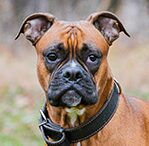
Fawn & Black Mask

Brindle

Fawn & White
My Many Looks
Affection Level
Intelligence
Training Ability
Shedding
Pet-Friendly
3 Kid-Friendly
Health Issues
Exercise Needs
Barking
Grooming Effort
My Breed Characteristics
White Boxers get a bad rap, so let’s set the record straight. They aren’t rare – about 25% of Boxers are white. They aren’t albino – they have eye, nose, paw, and skin pigment. They are more prone to deafness but their color doesn’t automatically mean they have health issues (and they certainly aren’t born aggressive). One thing is true, though – white Boxers are more susceptible to sunburn, so grab some doggy sunscreen!
Furbulous Fact
Puppy
I need socialization and obedience training early and often, especially in homes with kids. (Just make sure I’ve had all my vaccines first, pawlease)!
3-12 Months

Adult
I need at least 1 hour of daily exercise and playtime with my humans – I can get very destructive without physical and mental stimulation.
2-3 Years
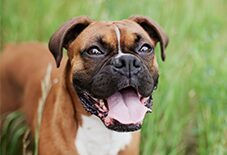
Senior
I’m prone to obesity and joint problems, so switch to a senior-friendly dog food to help me maintain a healthy weight.
7-8 Years

As you can see, we Boxers age pretty gracefully. Here are a few key milestones in my growth and development to be aware of as I grow up from a pupper to an adult and senior!
As I Grow Up
History of My Breed
Today, we Boxers are mostly known for being affectionate and goofy family dogs, but we come from some really tough and hard-working pups! The first Boxers were developed in late 19th-century Germany from a now-extinct breed, the Bullenbeisser (which means “bull biter” in German). These mastiff-type dogs were really popular with the German nobility in medieval times because they helped their humans hunt big game like deer, wild boar, and even bears! By the 19th century, big game hunting wasn’t very popular anymore, and Germans started breeding Bullenbeissers with Bulldogs and created the first Boxers!
Though the humans don’t agree on where exactly we get our name, some believe the name Boxer comes from the playful way we stand up and “box” other dogs with our front paws. Others think it comes from some old German words, but that’s not nearly as fun! Wherever our name came from, we were established in Germany by 1895. Like our ancestors, we were hard workers from the very start, helping our humans as police dogs, World War I military dogs, watchdogs, rescue dogs, guide dogs, and guard dogs, just to name a few of our jobs. Today’s Boxers are good workers, too – especially as watchdogs, since we’re smart, alert, and loyal to our humans – but we spend a bit more time snuggling on the couch than our ancestors did.
The American Kennel Club first recognized us in 1904 – and the American Boxer Club was formed in 1935 – but we didn’t become super popular right away. It wasn’t until after World War II, when American soldiers brought Boxers home with them from overseas, that Boxers really started to shoot up the popularity chart in America. Today, our winning combination of smarts, athleticism, work ethic, warmth, and playfulness make us the AKC’s 14th most popular dog breed.a
About Me
In addition to purebred Boxers like me, there are tons of pawfectly sweet mixed-breed Boxers that are looking to find their furever homes. You can learn where to find your next pet below!
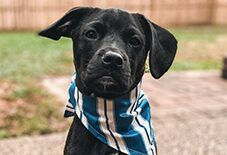
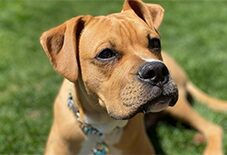
Pawesome Pups to Parent
1
Check your Boxer for lumps monthly.
Boxers are very prone to developing cancerous lumps called mast cell tumors. I recommend feeling over your dog’s body every month to look for new growth. If you find a new lump, I recommend recording the location, size, shape, and texture. If the growth is still present in the next month or you notice rapid changes, then I recommend evaluation by your veterinarian.
2
A little grooming goes a long way.
Boxers thankfully have minimal grooming needs, but I recommend brushing once a week with a rubber curry-brush or a hand glove. I recommend brushing your Boxer’s teeth once a day to help minimize dental disease. Also, their nails should be trimmed every four to six weeks to reduce overgrowth.
3
Be proactive about your Boxer’s health with supplements.
I recommend Boxers being started on glucosamine, chondroitin, and fish oil supplementation at one year. These supplements will help encourage joint health and decrease inflammation associated with arthritis in the future. Additionally, fish oil supplementation will help improve skin health as some Boxers can deal with atopy (contact allergies).
1
Exercise your Boxer but don’t overexert them.
Boxers have a history of being very versatile dogs and are well suited to a variety of lifestyles. But one thing is clear – they require exercise. There are many physical activities that owners can do to exercise their Boxer, including walking, hiking, and games of fetch and tug. It is important to be cautious regarding overexertion, since Boxers have respiratory features that can complicate their breathing and make them prone to conditions such as heat stroke.
2
Early socialization is a must for your Boxer.
It is important to socialize boxers with any and all human and non-human animals that they may encounter in their lifetime to ensure they’re comfortable. Boxers tend to be social dogs, and allowing them the ability to socialize with other humans and other dogs will benefit them greatly. They can be very sweet but, like any dog, they may be fearful if not socialized properly. Socialization requires more skill than most people think – therefore, you may want to work with a certified dog trainer to prevent some of the behavior issues that can develop due to under-socializing them or socializing them too exuberantly.
3
Get your Boxer used to being handled early in life.
Boxers are prone to some health conditions (mainly allergies, ear infections, eye problems, and musculoskeletal problems), so it’s important that they get used to having their feet and limbs touched and manipulated, their ears touched and cleaned, and other general handling. This desensitization can be beneficial and make life much easier if, later in life, your Boxer needs regular handling due to a medical condition.
While Boxers are a generally healthy breed, unexpected ruh-rohs can happen to any dog at any age. If your pup gets hurt or sick, pet insurance can help you say ‘yes’ to the best care, even when it’s costly. When it comes to shopping for this breed, you’ll want to choose insurance plans like Pumpkin's, which can help cover the costs associated with the hereditary conditions Boxers are prone to developing. While a reputable breeder will conduct genetic testing on your pup’s parents to help minimize the chances of passing down hereditary conditions, they can’t always be avoided. Let’s look at some common ones, and how Pumpkin Dog Insurance plans could help cover the cost of care!
Cardiomyopathy
Boxer cardiomyopathy is a heart abnormality that makes it difficult for the heart to deliver blood to the body. If the condition is caused by an irregular heartbeat, it can be life-threatening. Meds are used to stabilize the heart and Omega-3 fish supplements have also been proven to treat dogs with this condition.a
Hip Dysplasia
An orthopedic condition where the ball and socket of the hip joint doesn't develop or work properly, leading to joint deterioration, pain, lameness, and/or arthritis. While mild cases can be managed with prescription meds and physical therapy, severe ones may require costly hip replacement surgery.
Hypothyroidism
Hypothyroidism occurs when a dog’s thyroid gland is underactive. This slows down their metabolism, which negatively affects all major organ functions. This condition can be treated (but not cured) with thyroid replacement hormone therapy for the remainder of a dog’s life.
Subvalvular Aortic Stenosis
With this condition, the aortic valve of the heart is narrowed, making it harder for the heart to pump blood from this valve to the rest of the body. Some cases can be treated with medication called beta blockers, but more severe ones may require surgery, such as balloon catheterization.

Why Get Dog Insurance?
from Pumpkin®
*Example illustrates reimbursement of a covered vet bill at a 90% reimbursement rate, where the annual deductible had already been satisfied and the annual limit had not yet been met. Coverage and reimbursement results vary based on policy options.