Meet the Miniature American Shepherd
Best Fur Friend
High Doggy I.Q.
Top Working Dog
Best Fur Friend
High Doggy I.Q.
Top Working Dog
Looking for a small dog with a big dog personality? I’m the breed for you! Don’t let our size fool you – we Miniature American Shepherds are a hard-working, high-energy herding breed and we are built tough just like our Australian Shepherd cousins! I love kids and other dogs, but my playful energy can be too much for tiny humans – socialize me early so I learn not to herd your babies! I need an active family (1-2 hours of physical activity a day is a must for me). While my small size is apartment-friendly, I need lots of outside time. I’m athletic and eager to please which makes me easy to train, and I’m a superstar at dog sports like agility and flyball!
Because I’m so smart, I need lots of mental stimulation as well as exercise, so I don’t do well when left alone for long periods of time. My furbulous looks aren’t super high maintenance – I just need regular brushing and occasional baths. I’m a loyal and loving pup, which makes me a great watchdog, and if you’ve got the time and energy to tire me out, I’ll be the best cuddle buddy ever!
Ready to learn more about me? Let’s dig in.
Lively
Smart
Loyal
About Me
Personality
Group
Herding Group
Origin
California, United States
Life Span
12-13 Years
AKC Breed Popularity
Length Range
13-18 Inches
Weight Range
20-40 Lbs

Black

Blue Merle

Red
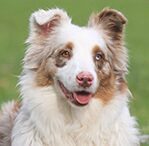
Red Merle
My Many Looks
Training Ability
Intelligence
Exercise Needs
Affection Level
Pet Friendly
Kid-Friendly
Shedding
Grooming Effort
Barking
Health Issues
My Breed Characteristics
We Miniature American Shepherds may be small, but we are just as athletic as our bigger herding dog cousins! Our intelligence, high energy, and love of hard work make us great at all dog sports, but we are especially great at agility training! Agility competitions are becoming much more popular in the US, and we Mini Aussies are dominating the competition! One of us – a super talented MAS pup named Pixel – even won back-to-back championships in the 12-inch division of Westminster Kennel Club Master’s Agility Championship in 2019 and 2020!
Furbulous Fact
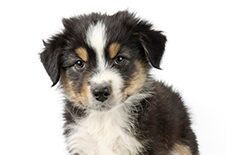
Puppy
I need early socialization & obedience training so I can learn how to channel my herding skills properly! (Just make sure I’ve had all my vaccines first, pawlease)!
3-9 Months
Adult
I’m at my best when I have a job to do so I need lots of mental stimulation and exercise in order to stay happy & healthy.
1-1.5 Years
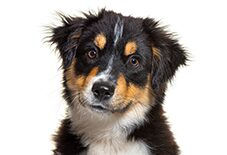
Senior
I’m prone to joint problems so switch to a senior-friendly dog food so I can maintain a healthy weight.
10-11 Years

We Miniature American Shepherds age pretty gracefully. Here are a few key milestones in my growth and development to be aware of as I grow up from a pupper, to an adult, to a senior!
As I Grow Up
History of My Breed
We Miniature American Shepherds are a new breed and are very closely related to our cousin, the Australian Shepherd. In fact, we used to be called Miniature Australian Shepherds, and even today some people call us Mini Australian Shepherds or Mini Aussies! My Australian Shepherd cousins were first bred in the American West by farmers and ranchers who used them as sheepdogs and cattle herders. By the mid-20th century, smaller Aussies were working on the rodeo circuit in the American West. In the 1960s, a group of Aussie lovers in California decided they wanted to create a small dog with Aussie traits and they used only these small Australian Shepherds (who were below the AKC breed standard size) to create my breed!
We were originally called Miniature Australian Shepherds but the Aussie breeders didn’t like that too much, so our name was changed first to North American Shepherd and finally to Miniature American Shepherd. We became super popular with equestrians in the U.S. since our compact size made us great travel buddies! Just like our breeders wanted, we had all the skills of an Aussie in a size that was more manageable for humans who lived in smaller spaces. The Miniature American Shepherd Club of the USA (MASCUSA) was formed in 1990 to promote and maintain my breed, and they worked hard to get us recognized by the American Kennel Club. Within a few years, they succeeded – we were accepted into AKC’s Foundation Stock Service in 2011 and were officially recognized as a member of the herding group in 2015!
About Me
Pawesome Pups to Parent
1
Purchase from a responsible breeder.
While well bred and cared for Mini Aussies can be very healthy, this breed is susceptible to hip dysplasia, which can cause pain and loss of mobility. In addition to heritable joint conditions, some mini Aussies are predisposed to a variety of genetic eye conditions that can cause blindness, including progressive retinal atrophy (PRA), cataracts, detached retinas, Collie eye anomaly, and more. Avoid heartbreak and veterinary expenses by purchasing puppies from responsible breeders who only breed dogs that are free of heritable disorders and provide health guarantees.
2
Provide lots of exercise and mental stimulation.
To be at their best and minimize behavioral problems and anxiety, Mini Aussies need to spend lots of time with their family, 30-60 minutes of exercise every day, and daily mental stimulation with food puzzles, training, and problem solving.
3
Avoid ivermectin.
Some Mini Aussies may have a hypersensitivity to ivermectin due to a MDR1 genetic mutation, leading to the phrase ‘white feet, don’t treat’. To be safe, do not give Mini Aussies ivermectin. This includes heartworm prevention that uses ivermectin as an active ingredient.
1
Exercise is key for good behavior.
Like other herding dogs, the Miniature American Shepherd needs heaps of exercise. Running in particular is important, so be ready to play a lot of fetch or take them for runs.
2
Give them a job!
A highly intelligent breed, shepherds thrive when they have a task to do. They will quickly absorb any training you throw at them, so keep it coming and they will be happy and healthy as can be.
3
Socialize them early.
Mini Aussies are highly social dogs, but they can exhibit behavior issues if they don’t get socialized early. Make sure you introduce them to lots of people and animals. The earliest months of their puppyhood are the most important, so throughout their first year make sure they meet lots of friends.
While Miniature American Shepherds are a generally healthy breed, unexpected ruh-rohs can happen to any dog at any age. If your pup gets hurt or sick, pet insurance can help you say ‘yes’ to the best care, even when it’s costly. When it comes to shopping for this breed, you’ll want to choose insurance plans like Pumpkin's, which can help cover the costs associated with the hereditary conditions Mini Aussies are prone to developing. While a reputable breeder will conduct genetic testing on your pup’s parents to help minimize the chances of passing down hereditary conditions, they can’t always be avoided. Let’s look at some common conditions, and how Pumpkin Dog Insurance plans can help cover the cost of care!
Cystinuria
Miniature American Shepherds are prone to cataracts, which are opacities that form on the lens of the eye. These can show up in puppyhood, or more commonly in aging adults. Depending on the rate of progression, vision impairment may be mild, or severe and call for costly surgery.
Degenerative Myelopathy
This is a progressive or chronic condition that affects the spinal cord and can lead to paralysis. It occurs when the white matter of a dog’s spine starts to deteriorate over time, causing symptoms similar to arthritis. Treatments include physical therapy and dietary supplements.
Hip Dysplasia
An orthopedic condition where the ball and socket of the hip joint doesn't develop or work properly, leading to joint deterioration, pain, lameness, and/or arthritis. While mild cases can be managed with prescription meds and physical therapy, severe ones may require costly hip replacement surgery.
Patellar Luxation
Miniature American Shepherds are predisposed to this orthopedic condition where the kneecap (patella) is dislocated from its natural position in the groove of the femur (thigh bone). This condition can greatly affect mobility, and while some cases are mild, severe ones require surgery.
Why Get Dog Insurance?
from Pumpkin®
*Example illustrates reimbursement of a covered vet bill at a 90% reimbursement rate, where the annual deductible had already been satisfied and the annual limit had not yet been met. Coverage and reimbursement results vary based on policy options.