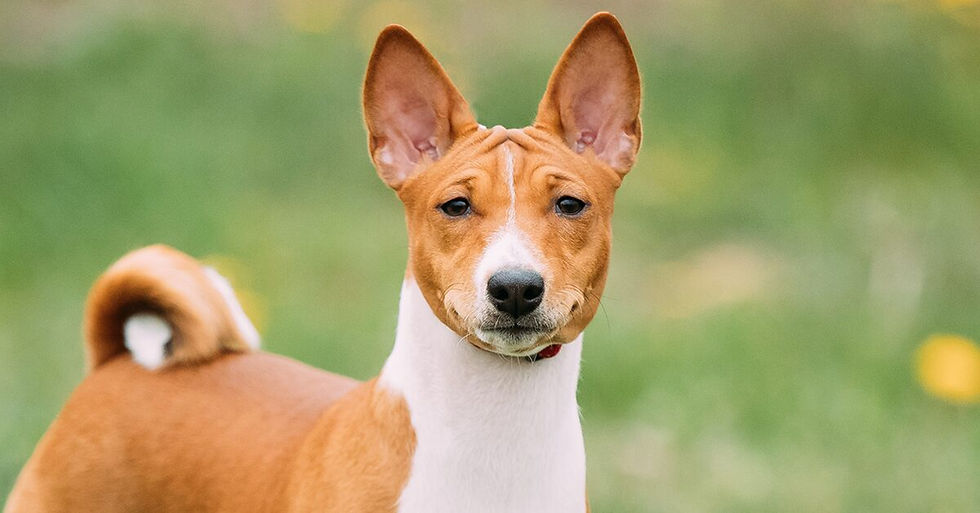
Meet the Basenji
Apartment Friendly
High Doggy I.Q.
Pawfect Playmate
Apartment Friendly
High Doggy I.Q.
Pawfect Playmate
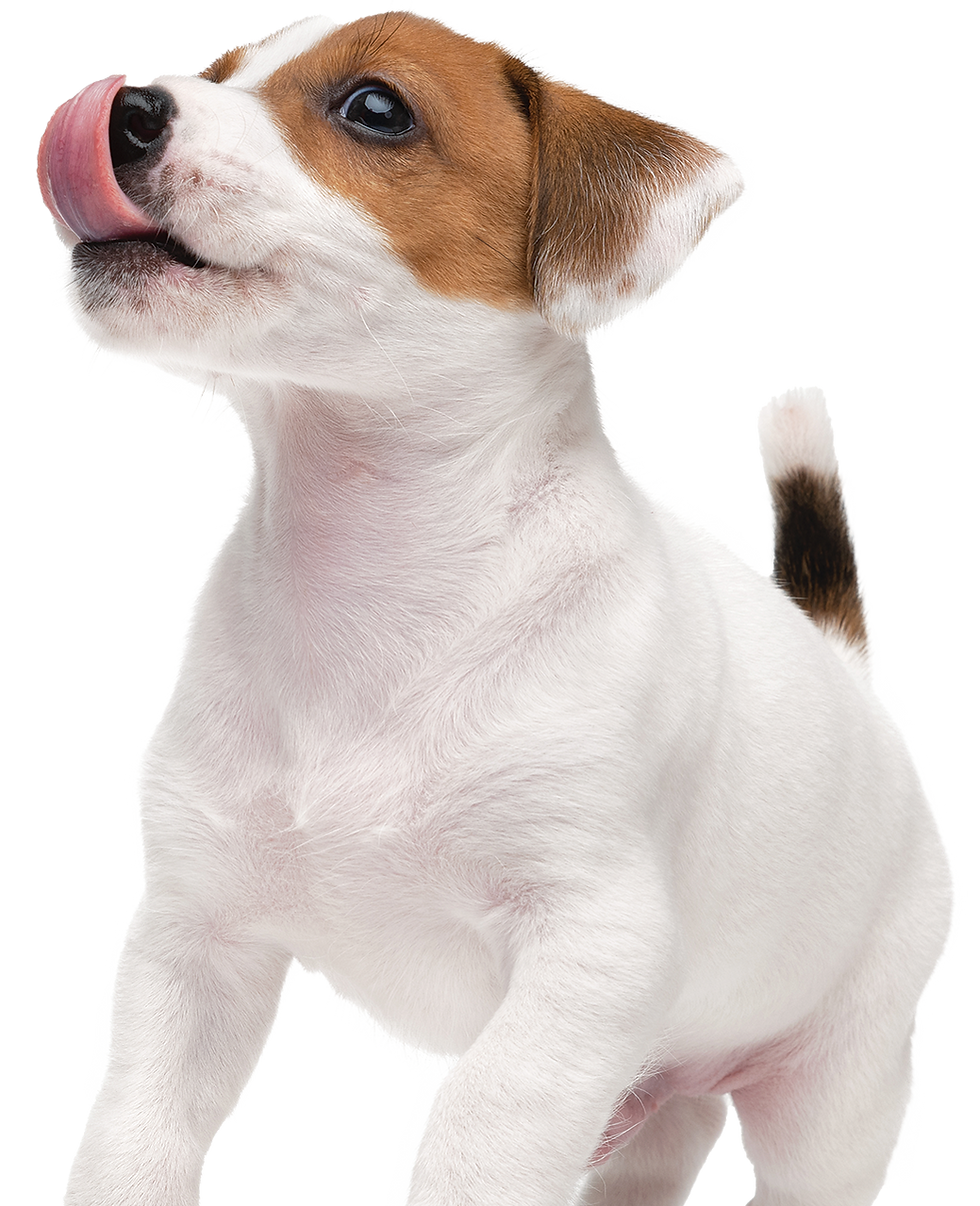
Looking for a smart, playful pup to bring into your home? Then I’m the pawfect pup fur you! I’m a lean, clean, energy machine who’s always up for chasing, fetching, and more! I have a mind of my own – which means I’m not the easiest to train – but I do well with pawsitive reinforcement! And you may think I need a lot of space because of my high energy levels, but I don’t mind apartment living. Plus, I love my fellow furbabies! I’m also great with kids – they know how to keep up with my playful pawsonality!
Although I’m pretty healthy and have a long life expectancy, you should be aware of some common Basenji health conditions, like pyruvate kinase deficiency, hypothyroidism, and hip dysplasia. Also, I don’t bark! Instead, I let out an interesting little yodel. That means if you choose me as your best bud, I might even sing for you! Yodel-ay-hee-hoo!
Ready to learn more about me? Let’s dig in.
Energetic
Playful
Intelligent
About Me
Personality
Group
Hound
Origin
Democratic Republic of the Congo
Life Span
13-14 Years
AKC Breed Popularity
Length Range
16-17 Inches
Weight Range
22-24 Pounds
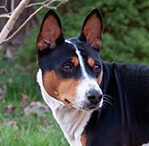
Black & White
Black, Tan & White
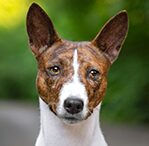
Brindle & White
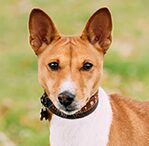
Red & White
My Many Looks
Kid-Friendly
Exercise Needs
Affection Level
Pet Friendly
Intelligence
Health Issues
Training Ability
Shedding
Grooming Effort
Barking
My Breed Characteristics
Basenji dogs have flat larynxes, which means we can’t bark – hence the name African Barkless Dog – but we can do something much, much cooler! When we’re excited or trying to get your attention, we make a sound that’s similar to a chortle. This long, drawn out noise is very distinct – and unlike anything you’ve ever heard from a pup. If you’re not a fan of yappy pooches, your search for a barkless dog ends here!
Furbulous Fact
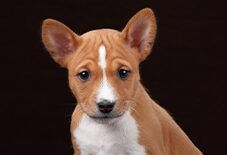
Puppy
I’m notoriously difficult to train because of my independent, catlike personality. It’s best to enroll me in puppy school early.
3-5 Months
Adult
I’ve been known to stir up trouble when I don’t get enough exercise – or when I’m left to roam freely. Plenty of play will keep the boredom away!
10-12 Months
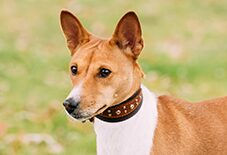
Senior
I might look old, but I'm still a young pup at heart! To keep up with my health as I age, remember to schedule regular vet visits.
12-14 Years
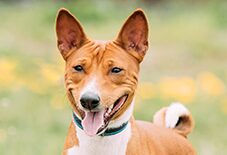
As you can see, we Basenjis age pretty gracefully. Here are a few key milestones in my growth and development to be aware of as I grow up from a pupper to an adult and senior!
As I Grow Up
History of My Breed
Remember learning about ancient civilizations in history class? Turns out, Basenjis were around for all of that! We’re thought to be one of the oldest dog breeds, with depictions of us turning up in ancient Egyptian, Mesopotamian, and Babylonian art. When these civilizations collapsed, we managed to stick around in the wild, living on the banks of the Nile and Congo rivers.
Eventually, we became a pawpular hunting dog in Central Africa, particularly the Congo. My name, meaning “village dog,” comes from Lingala and Swahili, and we sighthounds are often called the Congo dog. Our speed, sense of smell, and astute eyesight made us great at hunting prey in ancient Egypt. We’re even known for being furbulous at vertical jumping, which helped us peer over high grass to find the creatures we were looking for. Today, we work out our hunting instincts with some good old-fashioned lure coursing.
In 1895, a group of humans brought a pair of us to England in hopes of breeding us there, but unfortunately the two pups died suddenly of distemper. It wasn’t until 1937 that they decided to try again, bringing two more Basenjis over. In no time, dog-lovers in England went crazy for us and our erect ears! They were so excited to see us, in fact, that police had to be called to calm down the crowd!
While the female of the pair died quickly, Bois, the male, eventually made his way to Boston with a breeder, where he was introduced to a new lady Basenji. The rest is history, as they say! In 1942, the Basenji Club of America was formed, and two years later, we were officially recognized by the American Kennel Club (AKC), becoming the AKC’s 107th breed.
About Me
In addition to purebred Basenjis like me, there are tons of pawfectly sweet mixed-breed Basenjis that are looking to find their furever homes. You can learn where to find your next pet below!
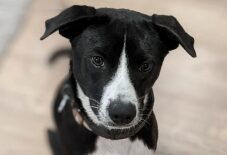
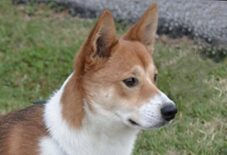
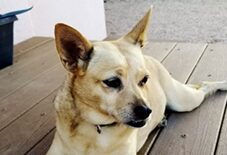
Pawesome Pups to Parent
1
Keep an eye on your Basenji’s eyes.
Basenjis are predisposed to some genetic eye issues, including glaucoma, progressive retinal atrophy (PRA), coloboma eye, and persistent pupillary membranes. Always tell your vet right away if you notice any changes in the size, shape, or color of your dog’s eye so you can address the issue right away. Some breeders might be able to tell you if their dogs have been screened for these, so consider discussing this beforehand or ask your vet about DNA tests.
2
Be watchful for signs of patellar luxation.
Patellar luxation is present in many dog breeds, including Basenjis. Basenji puppies are sometimes born with this condition, and other times it develops later on. Patellar luxation occurs when the kneecap is dislocated from the knee joint, causing mild to severe pain. It’s often harmless, but discuss the issue with your vet to decide if treatment is necessary.
3
Watch your Basenji’s weight.
Like many small, naturally trim breeds, Basenjis are prone to obesity. Make sure you’re feeding your Basenji high-quality dog food, and avoid giving them excess treats, especially human food. Also, give your dog regular exercise to help prevent obesity.
1
Let your dog get a ton of exercise.
This is a high energy breed that needs a lot of exercise. They should be taken on several walks a day with around two to three hours of extensive exercise a day. A fenced yard is necessary for these dogs to play in, as they need to be able to run around, but their prey instincts are too strong to be let off the leash just anywhere. If they stay sedentary, they’ll be unhappy and can start to misbehave. Do whatever you can to give them plenty of exercise to tucker them out.
2
Interrupt your Basenji when it’s in “predatory mode.”
Basenjis have a strong instinct to hunt and have a hard time keeping themselves from chasing after something they see as prey. Watch for the “predatory look” when you’re out with your dog, which is when a dog pauses, focuses on an animal, and hunches over. Interrupt your dog when it’s doing that and remove it from the situation.
3
Prioritize leash training.
Leash training is important for Basenjis because of their innate desire to chase things. Teach your puppy how to heel, which is a form of walking where the dog isn’t pulling you at all and are instead walking right beside you at the same pace. They’ll want to run ahead, and you’ll want to control that. It’s also important to teach them how to behave off the leash because that’s when they’re the most comfortable.
While Basenjis are a generally healthy breed, unexpected ruh-rohs can happen to any dog at any age. If your pup gets hurt or sick, pet insurance can help you say ‘yes’ to the best care, even when it’s costly. When it comes to shopping for this breed, you’ll want to choose an insurance like Pumpkin's, which can help cover the costs associated with the hereditary conditions Basenjis are prone to developing. While a reputable breeder will conduct genetic testing on your pup’s parents to help minimize the chances of passing down hereditary conditions, they can’t always be avoided. Let’s look at some common ones, and how Pumpkin Dog Insurance plans could help cover the cost of care!
Anemia
Anemia in dogs can be caused by several things, including kidney disease and iron deficiencies. It’s the result of low red blood cells and hemoglobin levels. Treatments include administering electrolytes via IVs, or blood transfusions. Dogs typically recover within a few months.
Fanconi Syndrome
This is a rare, genetic kidney disease found in one out of ten adult Basenjis. It prevents the renal tubules from reabsorbing electrolytes and nutrients back into the body like they’re supposed to. Potassium supplements, lots of hydration, and better nutrition are common treatments.
Canine Distemper
This is a very contagious virus that affects the respiratory, digestive, and nervous systems. It often presents as a common cold in dogs, but is serious and must be treated immediately. Dogs are given antibiotics, fluids, and other medications to help their immune systems fight the virus.
Hernia
A hernia is an abnormal opening in a muscle found near the belly, groin, chest, or rear legs. Most cases are due to genetics, not trauma or injury. Spaying/neutering is done as a preventative measure. Reducible hernias can easily be pushed back in place, but surgery is needed for severe cases.

Why Get Dog Insurance?
from Pumpkin®
*Example illustrates reimbursement of a covered vet bill at a 90% reimbursement rate, where the annual deductible had already been satisfied and the annual limit had not yet been met. Coverage and reimbursement results vary based on policy options.